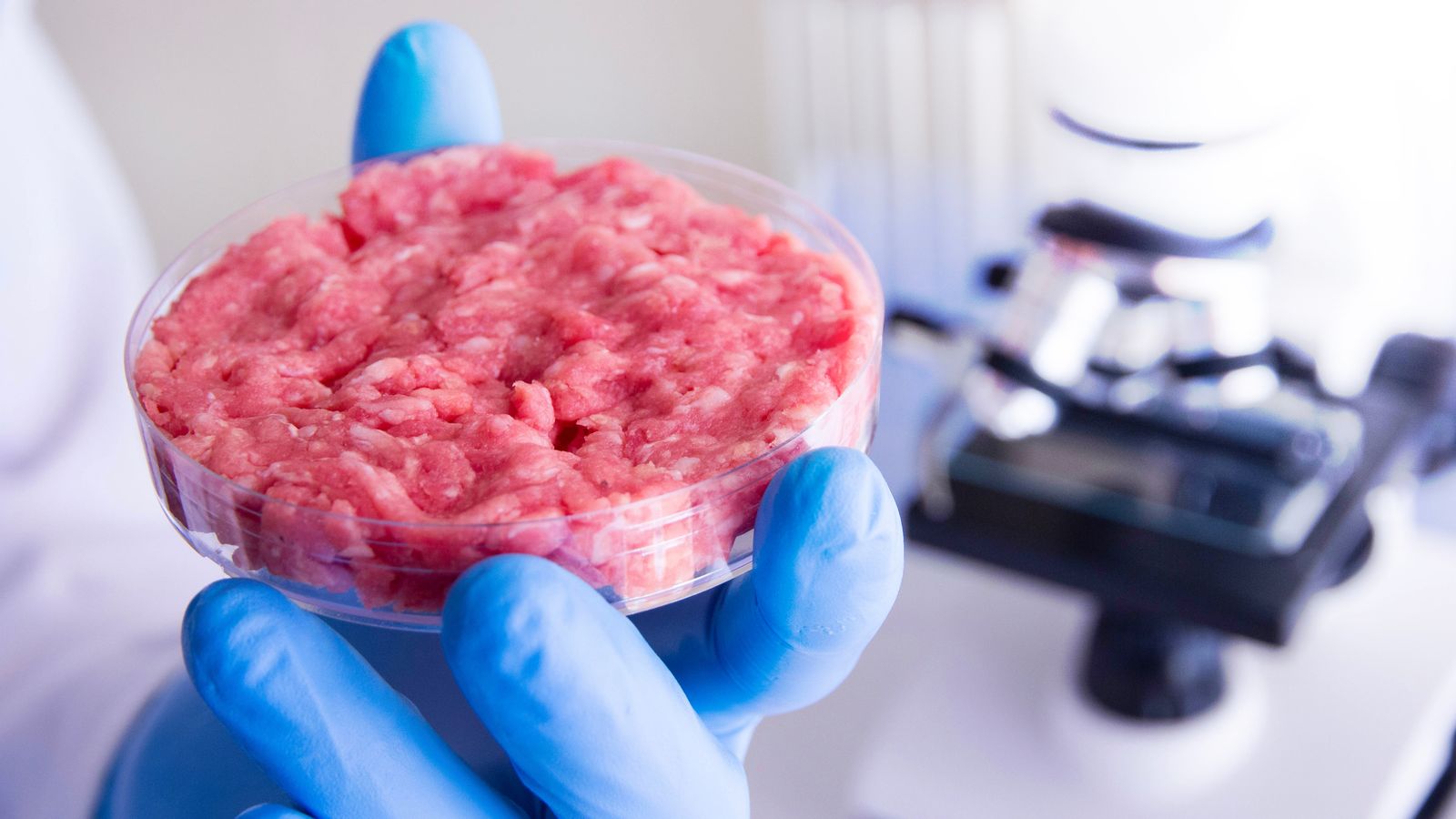
Earlier this month, a Shreveport television station ran a segment explaining to Louisiana viewers that lab-grown meat had "officially received federal approval in the United States" — and that this fact would likely change nothing about what shows up in their grocery stores. It was a strange thing for a local news outlet to feel obligated to clarify, but it captured something true about where the cultivated meat industry actually stands in 2026: the regulatory science is settled, and it is almost beside the point.
Five companies now hold federal clearance to sell cultivated protein in the United States. UPSIDE Foods and GOOD Meat, the division of Eat Just, were first, receiving FDA safety sign-off and USDA production approval for cultivated chicken in 2023. Wildtype followed in 2025, when the FDA issued a "no questions" letter — the agency's term for concluding it has no safety objection — clearing the San Francisco company's cultivated salmon for sale, the first time cultivated seafood had cleared the bar. Mission Barns secured approval for a cultivated pork fat ingredient the same year. Then came Believer Meats, an Israeli-founded firm that became the first foreign cultivated meat producer cleared for the U.S. market, receiving its FDA "no questions" letter in July 2025 and full USDA approval that November. The company had also just finished construction on a 200,000-square-foot production facility in Wilson, North Carolina, which it described as the largest cultivated meat plant in the world, with a stated capacity in the range of 10,000 to 12,000 metric tons of product annually. Two months after clearing that final federal hurdle, Believer Meats ran out of money. It laid off its remaining staff, ceased operations in December 2025, and later filed for insolvency in Israel; the North Carolina plant it had just finished building never entered commercial production and is now headed for receivership.
By any conventional measure, that is a regulatory success story: a novel food category that moved from laboratory curiosity to a five-company field with federal safety clearance and a plant capable of industrial-scale output, all within roughly three years. The agencies did their job. The science held up under scrutiny across multiple administrations. And it has amounted to remarkably little in terms of what an American consumer can actually buy.
The reason is that federal approval was never the industry's real obstacle, and the last two years have made that structurally explicit rather than incidental. While the FDA and USDA were working through pre-market safety consultations, state legislatures were building a parallel and, it turns out, more decisive track. Florida became the first state to ban the sale and manufacture of cultivated meat in 2024, making it a second-degree misdemeanor. Texas followed with SB 261, prohibiting the manufacture, processing, and sale of cell-cultured protein, effective September 2025 and set to sunset in September 2027 absent renewal. Indiana imposed a two-year moratorium running from mid-2025 through mid-2027, after which cultivated products sold in the state will be required to carry the label "this is an imitation meat product." Mississippi, Alabama, Montana, and Nebraska have passed comparable restrictions. At least seven states now have some form of ban or moratorium on the books, and the pattern shows no sign of slowing.
That state-level wall would be a footnote if federal approval simply preempted it, the way federal law ordinarily displaces conflicting state law when Congress has occupied a field. UPSIDE Foods bet its business on exactly that theory. Represented by the Institute for Justice, the company sued Florida in August 2024, arguing that its ban was expressly preempted by the Poultry Products Inspection Act, which UPSIDE argued gives the federal government exclusive authority over poultry products, and that the law separately violated the dormant Commerce Clause by insulating in-state conventional meat producers from out-of-state competition. UPSIDE later brought a parallel suit against Texas alongside Wildtype.
For a while, the preemption theory looked plausible. A district court initially allowed the case to proceed past a motion to dismiss, and the presiding judge suggested the dormant Commerce Clause question deserved close examination, noting that Florida's law might not actually benefit in-state producers if cultivated meat does not meaningfully compete with conventional meat in the marketplace. But in March, the Eleventh Circuit Court of Appeals ruled against UPSIDE on the preemption claim, finding that the poultry inspection statute's language limits its preemptive reach to laws directly governing processing facilities and operations, not to a blanket state prohibition on sale. The appellate panel concluded UPSIDE was unlikely to succeed on the merits of that argument. The dormant Commerce Clause claim survives and continues in the district court, but the more sweeping theory — that a federal safety clearance functionally legalizes a product nationwide — has now been rejected by an appeals court.
That distinction matters more than it might first appear. It means the industry's five federal approvals function less like a national market-access permit and more like a technical certification that individual states remain free to override entirely, provided they can articulate a public-health or consumer-protection rationale rather than naked economic protectionism, which is the one thing the dormant Commerce Clause still forbids. Florida's agriculture commissioner defended the ban in exactly those terms, describing cultivated meat as an unproven product category the state has an interest in restricting. Whether that framing survives the remaining Commerce Clause litigation is still an open question, but the structural lesson has already landed: winning at the FDA buys a company the right to keep fighting, state by state, rather than the right to sell.
This is a fundamentally different regulatory environment than the one most food-tech investors priced in a decade ago, when the working assumption was that FDA and USDA sign-off was the hard part and commercial distribution would follow more or less automatically, the way it does for a new food additive or a reformulated snack product. Cultivated meat instead landed in the same category as recreational cannabis or, before that, interstate wine shipping — a product that is federally lawful in principle but whose actual market geography is determined by fifty separate legislatures responding to entrenched local industries with direct financial exposure to the outcome. Conventional cattle, pork, and poultry producers have made no secret of viewing cultivated protein as a competitive threat, and state agriculture committees have proven considerably more responsive to that constituency than to venture-backed biotech startups headquartered in California or Israel.
Believer Meats' collapse is worth reading in that light, with one caution: the company's own insolvency filing points to construction cost overruns, delays, and a failed 2025 fundraising push rather than to any single state's ban. But the outcome still makes the structural point starkly. Clearing every federal hurdle and building the industry's largest plant bought Believer Meats essentially nothing in market terms — it never sold a pound of product before the money ran out. For the four approved companies still operating, UPSIDE Foods, GOOD Meat, Wildtype, and Mission Barns, distribution still depends on a state-by-state legal map that looks more like the patchwork governing gambling or fireworks than the uniform national market federal food regulation usually produces. A company can hold every federal approval available and still find its product legally unsellable in Texas, Florida, Mississippi, Alabama, Montana, Nebraska, and, for two years, Indiana.
None of this means the litigation is over or that the state bans will hold indefinitely. The Eleventh Circuit's ruling addressed only the preemption theory and a preliminary injunction; the dormant Commerce Clause claim — the argument that Florida is unconstitutionally protecting its cattle industry from out-of-state competition — remains alive in the trial court, and a different outcome there could still reopen the Florida and Texas markets regardless of what state legislatures intended. Florida's own briefing has argued that UPSIDE's claims about protectionist motive are speculative, while UPSIDE has pointed to public comments from the governor and agriculture commissioner explicitly citing the interests of the state's conventional cattle industry as evidence of discriminatory intent. That fight will likely take years to resolve, and its outcome will matter more to the industry's actual commercial prospects than any additional company clearing FDA review.
The federal approvals will keep coming. More companies are moving through the FDA's pre-market consultation process, and the agency's "no questions" framework has proven to be a reasonably fast, functional path to a safety determination once a company's data package is complete. But the industry's next phase of growth will be decided less by food scientists in Maryland than by state legislators and circuit court judges arguing over the outer boundaries of the Commerce Clause — a fight that has nothing to do with whether cultivated salmon or chicken is safe to eat, and everything to do with who gets to decide whether Americans are allowed to buy it.