Ask why it's so hard to land a job right now, and illegal immigration is one of the first answers you'll hear. The logic feels intuitive: more workers competing for the same jobs should mean lower wages and fewer openings for everyone else. It's a clean, satisfying story, and it has shaped years of policy debate.
It's also, according to the bulk of recent economic research, largely the wrong explanation for what American workers are actually experiencing in 2026.
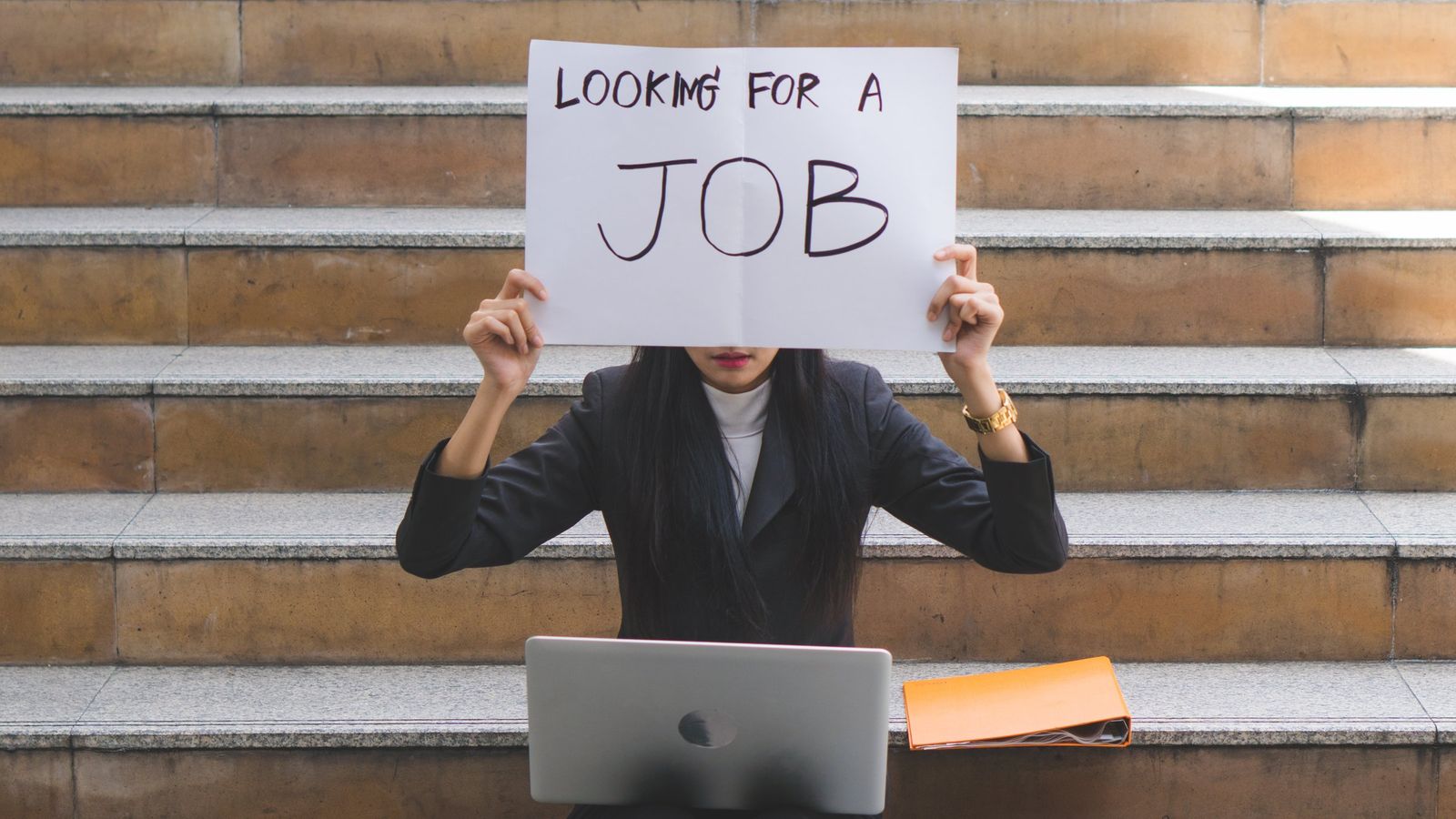
The labor market genuinely is rough right now, especially for young workers and recent college graduates. Unemployment has drifted higher since 2023, entry-level hiring has frozen up, and underemployment among new graduates is running near its highest level since the pandemic. But when economists go looking for the fingerprints of unauthorized immigration in that data, they mostly don't find them. What they find instead looks a lot more like interest rate policy, a stalled hiring cycle, the early edges of AI adoption, and a decades-long divergence between what college costs and what a degree pays back.
What the immigration research actually shows
The most detailed recent look at this question comes from Federal Reserve Bank of Dallas researchers, who used administrative microdata to track unauthorized immigrant worker flows into local labor markets between 2021 and 2024. Their finding: those inflows increased local employment roughly one-for-one, without producing measurable declines in local wages. The same researchers did find a real cost elsewhere — unauthorized worker flows pushed up local house prices and rents, since new residents added to housing demand without adding to housing supply. The Dallas team also found that overall labor income per capita fell somewhat in areas that received more unauthorized workers. They attribute that to a compositional shift — more lower-wage workers joining the local workforce, not existing workers taking pay cuts — but critics of the study have pointed to that same number as evidence of wage suppression. The underlying figure isn't in dispute; how to read it is.
That finding isn't sitting alone. A separate Federal Reserve Bank of Minneapolis analysis, using different data and methodology, found that declining net immigration explains 40% to 60% of the recent slowdown in U.S. job growth — and that real wage growth has actually slowed the most for low-wage workers, the group that should benefit most if immigrant labor were suppressing their pay. Separately, economists at the University of Texas built a model of what happens if half the unauthorized workforce were removed, and found it would lower native-born real wages nationally by roughly 0.3% — the opposite of what the standard competition story predicts, because unauthorized and native workers are often complements rather than substitutes.
A separate reexamination of two decades of national wage data, covering 2000 through 2023, found that net immigration raised wages for less-educated native-born workers by an estimated 2.6 to 3.4%, while the effect on college-educated natives was close to zero. Isolating the undocumented population specifically is harder, and estimates of the wage-suppressing effect that undocumented labor specifically has on comparably low-skilled native workers range widely, from roughly 0.4% to 7.4%, a spread wide enough that researchers treat it as a sign of measurement difficulty rather than a settled number. A widely cited Migration Policy Institute analysis by a University of California, San Diego economist reached a similarly split verdict: illegal immigration's effect on the overall U.S. economy is negligible, but low-skilled native workers who compete most directly with unauthorized labor do see a modest wage penalty.
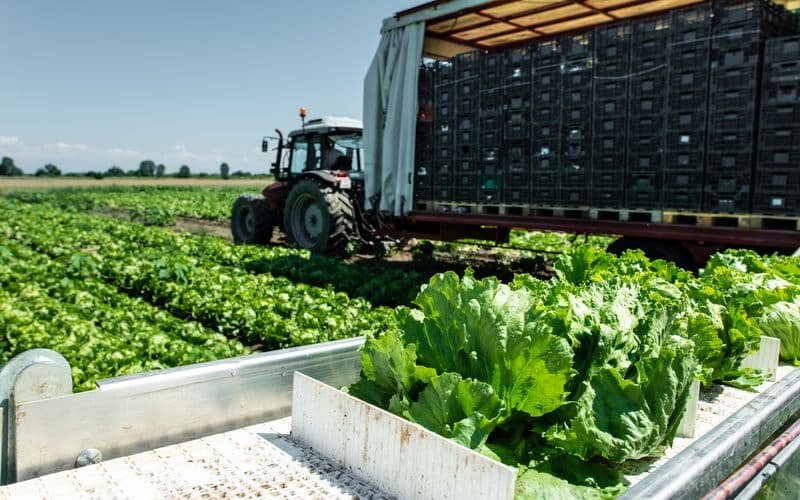
Sector-specific dependence complicates the picture further. Undocumented workers make up an outsized share of the agricultural workforce in states like California, and researchers who modeled the 2025 enforcement surge in Oxnard found that removing that labor could shrink regional agricultural output by double digits. The American Immigration Council — an immigrant-advocacy nonprofit, worth flagging given the source — has projected that deporting one million undocumented workers per year could reduce U.S. GDP by 4.2% to 6.8%, concentrated in agriculture and construction. A separate, ideologically distinct source reaches a comparable order of magnitude for a larger deportation scenario: the Peterson Institute for International Economics estimated that deporting 8.3 million undocumented immigrants would cut GDP and employment by roughly 7% each by 2028. None of that is the story of immigrants displacing native workers broadly. It's closer to the opposite: in specific industries, unauthorized labor has become load-bearing.
There's also a data point that cuts directly against the competition narrative. Moody's Analytics chief economist Mark Zandi has pointed to an unusual reversal in the numbers: foreign-born unemployment fell below native-born unemployment in October 2025, even as immigration enforcement intensified and the immigrant labor supply contracted. The Bureau of Labor Statistics' own 2025 annual data confirms the direction: the foreign-born jobless rate held at 4.2% for the year while the native-born rate rose to 4.3%. Zandi has argued that native-born workers generally aren't rushing to fill the jobs immigrants leave behind: "it would require much, much higher wages," he told Fortune, wages high enough to make many of those businesses uneconomical to run. If competition from unauthorized workers were the dominant force behind native joblessness, tightening that supply should have shown up as clearer relief for native-born workers. So far, the data isn't showing much of it.
The stronger suspects: Fed policy, AI, and a frozen hiring cycle
Look instead at the timeline, and a more conventional story emerges. The unemployment rate for workers aged 20 to 24 hit a 54-year low in spring 2023, then climbed steadily as the Federal Reserve's aggressive 2022–2023 rate hikes worked their way through the economy. Economists at the Federal Reserve Bank of St. Louis found that slowing labor demand — not immigration, not AI — accounted for the largest share of the deterioration in young workers' job prospects between April 2023 and December 2025, showing up mainly as fewer job openings rather than layoffs.
Employers, meanwhile, settled into what former Fed Chair Jerome Powell has described as a "low-firing, low-hiring" environment: companies aren't cutting staff aggressively, but they've also largely stopped bringing on new junior employees. That freeze has hit new entrants hardest, since they have no existing foothold to protect. The Economic Policy Institute found that much of the recent rise in young-graduate unemployment reflects more young people entering a crowded job search rather than an actual wave of job losses. Indeed's platform data has shown workers with a decade of experience increasingly applying for entry-level roles, crowding out the graduates those jobs were meant for.
AI is a real factor, but a narrower one than the headlines suggest. Stanford researchers found a 13% employment decline since 2022 among workers aged 22 to 25 in the most AI-exposed occupations, concentrated in people transitioning from school into their first job rather than in layoffs of existing employees. Because that group is a small slice of the overall labor force, Dallas Fed researchers estimate the aggregate effect on the national unemployment rate has stayed modest so far. A London School of Economics study from earlier this year found remote work, which raises the cost of supervising and training junior staff, was a better predictor of the entry-level hiring slowdown than AI adoption itself.
The other suspect: what college now costs versus what it pays
The second piece of the "tough labor market" story that gets less attention than immigration is the widening gap between college costs and the wages a degree eventually produces. Tuition and fees at four-year public institutions have risen by roughly 220% since the mid-1970s, according to figures compiled from Department of Education data, while private nonprofit tuition rose roughly 200% over the same stretch. Total student debt nationally now exceeds $1.7 trillion.
The degree still pays off on paper. Bureau of Labor Statistics data shows bachelor's degree holders earn a median 66% weekly wage premium over workers with only a high school diploma, adding up to more than a million dollars in additional lifetime earnings for a typical 40-year career. But that premium has become slower and less certain to arrive. The Federal Reserve Bank of New York has reported that underemployment among recent graduates — meaning graduates working in jobs that don't require a degree — reached roughly 42% this spring, the highest share since 2020. When the payoff on a $30,000-plus average debt load shows up five or ten years later than it used to, rather than immediately at graduation, the tuition bill starts to look a lot more like a risk than an investment, particularly for lower-income families with less room to absorb that delay.
The honest answer
None of this means immigration policy is economically irrelevant. It plainly isn't: it shapes housing demand, government transfer spending, and the fortunes of specific industries like agriculture and construction that depend heavily on immigrant labor, authorized and not. But the claim that illegal immigration is the primary reason the broader U.S. labor market feels tough right now doesn't hold up well against the data. The stronger, better-supported case points to a Federal Reserve tightening cycle that cooled hiring faster than it cooled inflation, an entry-level job market still adjusting to remote work and early AI adoption, and a higher-education system whose costs have outrun its payoff timeline for an entire generation of graduates. Those are less politically satisfying explanations than a simple story about competition for jobs. They also happen to be the ones the evidence actually supports.