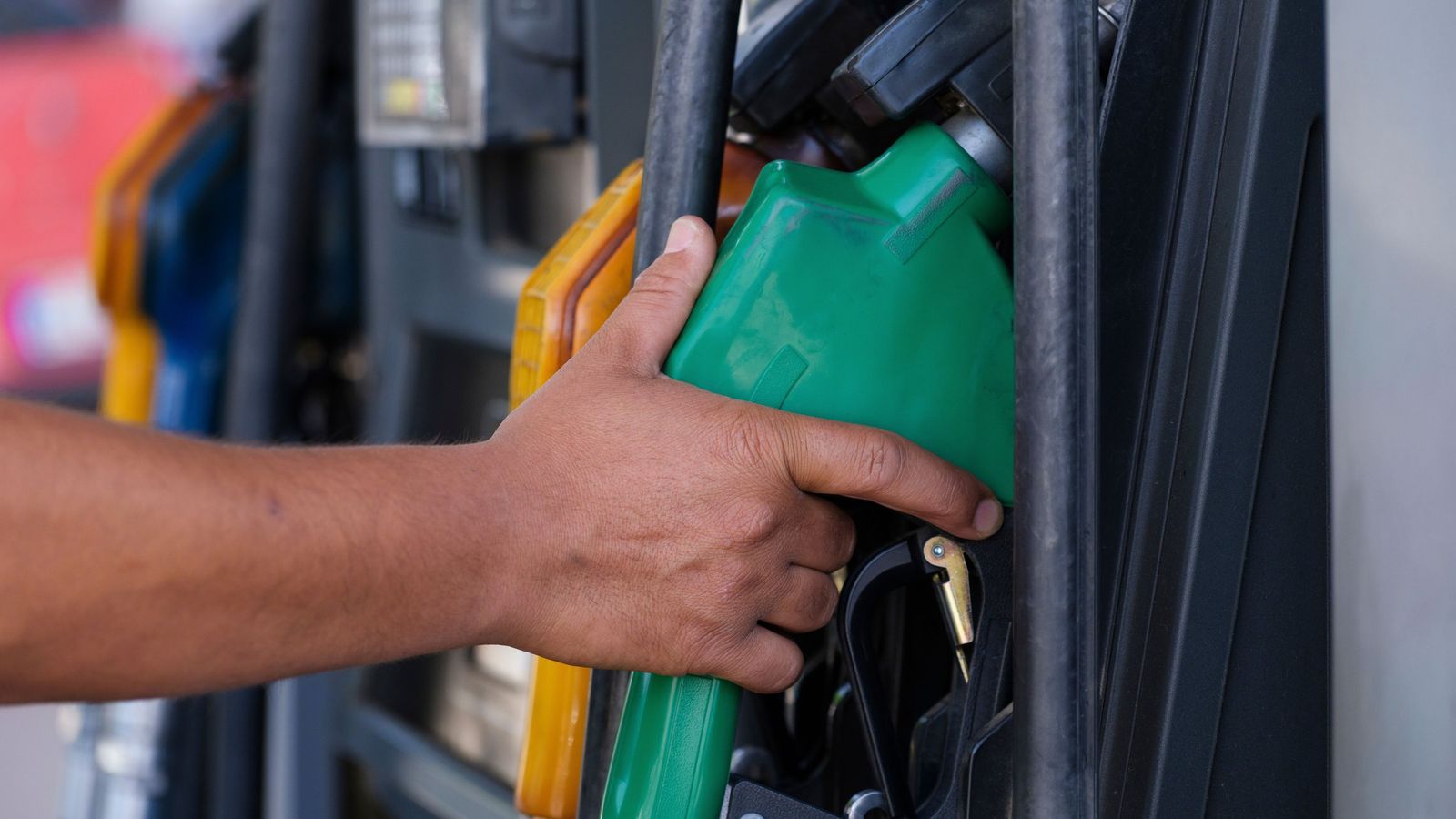
The number most Americans watch is the one on the sign at the corner station. Regular gasoline averaged $4.47 a gallon on Friday, up $1.53 since the war with Iran began, according to GasBuddy data reported by ABC News. It is a painful figure, and it is the one that shows up in political ads and dinner-table complaints. But it may not be the price that matters most for what the war costs a typical household this fall. That could be diesel, a fuel most drivers never buy, and it is now at the highest level ever recorded in nominal terms.
Diesel averaged around $6.43 a gallon Friday morning, a record, per the same GasBuddy data. The federal government's figure is a bit lower but tells the same story: the Energy Information Administration put the national average at $6.29 on Sept. 14, the highest in nominal terms since it began publishing the series in 1994. The agency noted that, adjusted for inflation, the price is the highest since 2022, so the record is a nominal one. AAA reported that diesel topped its 2022 record on Sept. 4, at $5.85, according to CBS News and Fox Business, and its national average had climbed to about $6.49 by Saturday, roughly 75% above a year earlier, according to figures reported by BusinessToday. The trackers measure slightly differently, but they agree on the direction. In parts of California, diesel has passed $8 a gallon, Reuters reported.
The fuel behind the fuel
The reason this matters more than the pump price is what diesel does. Regular gasoline moves people. Diesel moves everything those people buy. Erich Muehlegger, an economics professor at the University of California, Davis, told Axios that diesel is "an input to virtually everything we consume."
The numbers back that up. Diesel powers 97% of the largest commercial trucks, more than two-thirds of all farm and construction equipment, and nearly all locomotives and marine workboats, according to the Engine Technology Forum, an industry group. Trucks carry more than 72% of the nation's freight by weight, according to the American Trucking Associations. Michigan State University economist David Ortega told Reuters that "the majority of our food moves on trucks and those trucks use diesel."
That makes a diesel spike behave differently from a gasoline spike. When gas gets more expensive, households absorb it directly and can respond by driving less. When diesel gets more expensive, the cost enters the economy upstream, at the farm, the warehouse and the loading dock, before any shopper has a chance to respond. It surfaces later as a delivery surcharge, a higher wholesale invoice or a shelf price. AAA spokesperson Lori Weaver Hawkins told WKYT in Kentucky that transport companies add heavier surcharges that are ultimately passed along to consumers, whether or not they drive a diesel vehicle.
A shortage of the product, not just the crude
Crude oil is expensive, with Brent trading around $103 a barrel Friday, ABC reported. But the diesel squeeze is running well ahead of what crude alone would explain, and that is the clue to what is really happening.
Diesel typically costs more than gasoline for structural reasons, Axios noted: higher taxes, stricter environmental rules that make refining more expensive, and a lower yield per barrel of crude. This year, those built-in disadvantages have been compounded by a loss of supply. The Energy Information Administration said global distillate supplies, a category that includes diesel, are tight because of reduced refining activity in Russia, China and the Middle East. Higher prices overseas, the agency said, have increased demand for U.S. diesel exports, and net exports have remained near or above their previous five-year high since February. In other words, part of America's diesel supply is being pulled abroad by higher prices there.
The inventory picture shows the strain. In the week ended Sept. 11, U.S. distillate stocks were 13% below the five-year seasonal average, the agency said, even after a 1.6 million-barrel weekly build. Inventories, which normally rise over the summer, have stayed roughly flat this year. The agency's September outlook forecast that stocks will fall below 100 million barrels in September and remain below the five-year low through much of 2027, a projection made before the latest weekly build. And U.S. refiners cannot simply make more. EIA reported that they ran at about 97% of capacity in the week ended Sept. 11, and that distillate production averaged 5.1 million barrels a day from January through August, the most since 2019.
The clearest gauge of the squeeze is the diesel crack spread, the gap between the price of a barrel of crude and the refined product made from it, as Axios described it. The spread topped $100 a barrel for the first time in August, according to DieselNet, and reached records above $107 in early September, according to RBN Energy and other market analysts. RBN called such a spread a very strong market signal, but noted that it does not translate into more output when most U.S. refiners are already running near their practical limits.
Two wars sit behind that bottleneck. The disruption in the Strait of Hormuz, which followed the U.S.-Israeli attack on Iran in February, has upended global fuel flows, and Ukraine's drone campaign against Russian refineries has cut into diesel supply further, according to ABC and Axios. Russia, which supplied about 11% of the world's diesel last year, according to Bloomberg's compilation of Vortexa data, banned diesel exports on July 8 after the strikes caused domestic shortages, Reuters reported, and has since extended the restrictions, with the producer ban now running through Sept. 30, according to the Kyiv Post and other outlets. GasBuddy petroleum analyst Patrick De Haan wrote that until the refining supply picture improves, both gasoline and diesel prices face continued upward pressure, Axios reported. The latest escalation came Sunday, when Russian officials said Ukraine launched more than 1,000 drones at Russia, including hundreds toward Moscow, the Associated Press reported. Moscow's mayor called it the largest such attack on the capital and said the Moscow Oil Refinery was damaged. Ukrainian President Volodymyr Zelenskyy said Kyiv struck oil and logistics facilities.
The farm gate and the highway
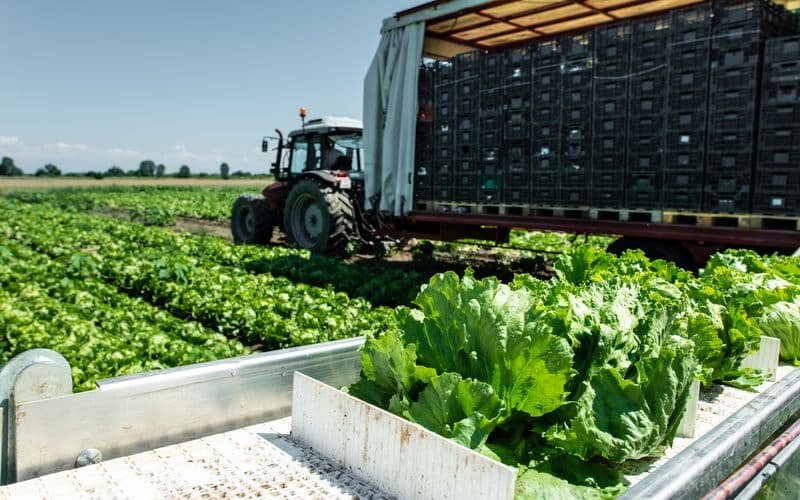
The timing is unforgiving. Farmers are entering the heaviest diesel stretch of the year, and Reuters reported that Purdue University economist Michael Langemeier estimates fuel costs are up $11 per acre for corn and $7 per acre for soybeans compared with last year. In South Dakota, farmer Drew Peterson told Reuters he expects to spend as much as $1,500 a day fueling a single combine, double last year. "You can't just say, well, diesel is expensive, I'm not going to harvest," he said.
Getting crops and produce to market adds another layer. According to Reuters, the cost of moving produce out of California is up 40% to 120% from a year ago. Kansas Republican Sen. Roger Marshall asked Agriculture Secretary Brooke Rollins in a Sept. 11 letter for temporary relief for farmers, and a USDA spokesperson said the agency is looking at every option, with Rollins promising more information in the coming weeks, Reuters reported.
On the road, the math is unforgiving too. The American Transportation Research Institute reported that the average cost of operating a truck reached a record $2.336 per mile in 2025, and $1.854 excluding fuel. That implies fuel accounted for roughly 48 cents a mile, about a fifth of the total, at last year's prices. If diesel is about 70% more expensive and nothing else changes, a simple calculation suggests fuel alone would add roughly 14% to a truck's per-mile cost. That is arithmetic, not a forecast, since carriers can adjust routes, speeds and pricing, but it shows why freight companies are moving quickly to attach surcharges.
Why it isn't in your grocery bill yet
If the cost pressure is this large, why hasn't it already shown up at the store? In part, because it takes time. The Bureau of Labor Statistics reported that food prices rose 2.7% over the 12 months ending in August, with prices for food at home, the grocery-store category, up 2.2% and unchanged for the month. That is a modest figure next to the fuel spike. The energy index, by contrast, rose 16.3% over the year, and overall inflation stood at 3.4% in August, more than a percentage point above the Federal Reserve's 2% target.
ABC reported that analysts have said the price increase on any single item is likely to be modest, but the accumulation of extra costs across many goods is what strains household budgets. That is the nature of a hidden cost: it is spread thin across thousands of products, so no single price tag announces it. Reuters reported that price hikes at grocery stores appear likely given how thin farm margins already are, though how large they will be depends on how long diesel stays this high. The August data also predate most of this fall's harvest-season diesel spending.
The Federal Reserve is aware of the problem, and it is limited in what it can do about it. On Wednesday, the central bank raised its benchmark rate by a quarter point to a range of 3.75% to 4%, its first increase since 2023, in a unanimous vote, CNBC reported. Chair Kevin Warsh said the Fed cannot influence an individual price, whether oil or groceries, but can act to keep changes in relative prices from spreading across the economy, ABC reported. NPR noted that higher rates will not automatically bring lower prices at the pump.
What to watch next
The outlook depends on three things: whether Hormuz traffic recovers, whether Russian refining capacity returns, and whether U.S. inventories start to rebuild. The Energy Information Administration's September forecast, issued Sept. 9 before the latest price surge, projected retail diesel averaging $5.07 a gallon for 2026 and $4.40 in 2027. Those are full-year averages that include months when prices were lower, so they would imply meaningful relief only if supply conditions ease. President Donald Trump said Friday that the war will end soon and that gas prices will drop back to prewar levels, maybe lower, when it does, Fox News reported. He has made similar predictions since the war's early weeks, NBC News reported. Market analysts who follow the crack spread point to the weekly federal inventory report as the first sign that a rebuild has begun.
For households, the diesel shock has one more channel that is easier to see. The National Energy Assistance Directors Association projected in a Sept. 14 report that households heating with oil will pay 31.3% more this winter, driven by the surge in heating oil prices from the war. Only about 4% of U.S. households use heating oil, and roughly three-quarters of that oil is used in the Northeast, the group's executive director, Mark Wolfe, told the Daily Caller News Foundation. Across all heating fuels, the group projects costs will rise 8.7%, a jump it said is moderated by expectations of a warmer winter tied to El Niño.
The political stakes are visible. Reuters noted that cost of living is expected to be a primary voter concern in November's midterm elections, and Axios described diesel as a growing political problem for Trump. But the underlying lesson is not partisan. The pump price is the part of this crisis people can see. Diesel is the part that works through the supply chain, arriving at the checkout line as a cost that no one announced and few can trace.