Samsung Electronics America notified employees on May 29 that its US headquarters would move from Englewood Cliffs, New Jersey, to Plano, Texas, by the end of 2026. The company confirmed the decision publicly on June 1, and by June 30, a WARN Act filing made the human cost concrete: 739 jobs affected at the Englewood Cliffs campus, roughly 62% of the roughly 1,200 people who work there. Around 100 more employees, including staff in the mobile division, have been let go at the Plano office itself, according to Reuters. This is the second time in under a year that Samsung Electronics America has relocated its headquarters, and it's worth walking through exactly what's happening, why the company says it's happening, and what it reveals about how Samsung is restructuring its American operations around its chip business.
A headquarters that barely existed
The New Jersey campus at the center of this move is unusually new. Samsung Electronics America previously operated out of Ridgefield Park, New Jersey, before relocating to Englewood Cliffs — into space vacated by Unilever — with a public grand opening on September 22, 2025. That event was attended by state and local officials, including U.S. Representative Josh Gottheimer, who framed the investment as a sign of Samsung's long-term commitment to the state. Eight months later, employees were told the headquarters was moving again, this time out of New Jersey entirely.
Samsung's official statement to NJ.com framed the move as a broader business transformation meant to position the organization for long-term growth, and said the transition, to be completed by year's end, was designed to strengthen coordination across teams and sharpen the company's focus on the priorities that matter most to customers and partners. The internal notice sent to affected employees on June 30 was more blunt, describing an "enterprise-wide reduction-in-force." A majority of the New Jersey employees affected received relocation offers to Texas, the company said, though it has not disclosed exact numbers, severance terms for those who decline to relocate, or how many relocation offers it expects will actually be accepted.
Why Texas, and why now
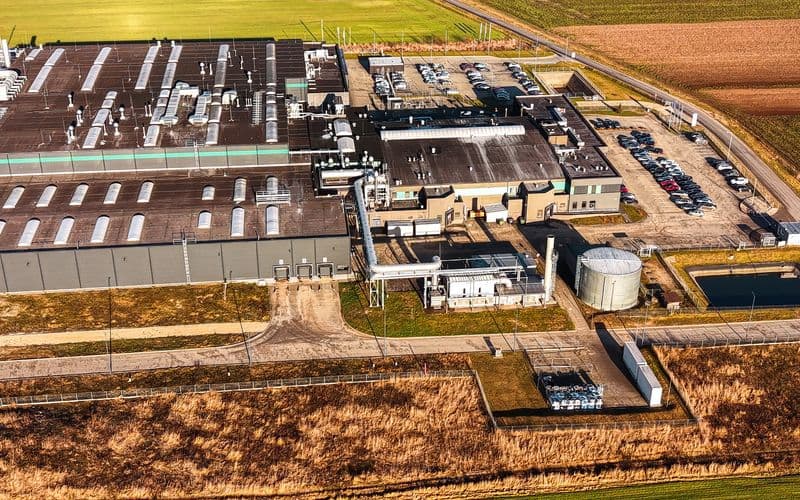
Samsung's stated rationale centers on consolidation. The company already operates an established semiconductor fabrication plant in Austin and is bringing a new, more advanced foundry online in Taylor, Texas, scheduled to begin operations by the end of 2026. Plano itself already hosts Samsung's existing mobile and networking business campus. Moving the consumer electronics headquarters to Plano puts corporate leadership physically close to two of the company's largest American investments rather than three hours away in New Jersey.
There's also a tax dimension that Samsung hasn't emphasized publicly but that state business groups have been quick to point out. New Jersey's top corporate income tax rate is 11.5%, the highest of any state in the country, according to the Tax Foundation's 2026 rankings — nearly five points above the national average of roughly 6.6% among states that levy the tax at all. Texas charges no state corporate income tax whatsoever. New Jersey business advocacy groups, including NJBIA, have pointed to the state's tax burden and regulatory costs as a recurring reason large employers are choosing not to grow there, and some officials publicly criticized Samsung's move at the time on those grounds.
The layoffs aren't isolated to one office
The Englewood Cliffs cuts are the most visible piece of this restructuring, but they're not the only one. Samsung SDS America, the company's separate IT services affiliate, filed its own state-mandated notice in June flagging as many as 179 potential role eliminations at its Ridgefield Park, New Jersey office. Samsung has said that move is tied to a relocation of SDS America's own North American headquarters and is unrelated to the Electronics America layoffs or restructuring. Whether the two moves are formally connected or not, the effect across Samsung's New Jersey footprint this summer has been the same: offices tied to the company's consumer-facing and services businesses are emptying out, while headcount and corporate infrastructure consolidate in Texas.
Samsung has said there is no broad, global restructuring underway within its consumer products business, and has characterized the New Jersey cuts as tied specifically to the headquarters relocation rather than a broader downsizing. Current and former employees cited in Reuters' reporting have said they expect the consolidation to continue, specifically anticipating further integration of Samsung's appliance, home entertainment, and mobile divisions as the company continues directing resources toward its semiconductor business.
The backdrop the move is happening against
The timing of the relocation and layoffs is notable mainly because of what else Samsung reported in the same stretch of summer. On July 7, the company issued preliminary guidance for a record-breaking second quarter: operating profit of approximately 89.4 trillion won, or $58.4 billion, a roughly 19-fold increase over the same quarter a year earlier and the largest single-quarter operating profit any technology company has ever publicly reported, ahead of both Nvidia's and Apple's most recent quarters. Revenue came in at 171 trillion won, more than double the prior year's figure. The driver, by Samsung's own account and independent analyst consensus, is overwhelming AI-driven demand for the high-bandwidth memory, DRAM, and NAND flash chips that power AI data centers — demand that has outrun global supply for three consecutive quarters and pushed memory prices sharply higher across the board.
That record profit sits almost entirely in Samsung's semiconductor division, which has announced no comparable layoffs or relocations. The cuts and the headquarters move are concentrated instead in the consumer electronics business — the unit that sells phones, televisions, and home appliances, and that, according to analysts tracking Samsung's divisional performance ahead of the company's full segment-level earnings report on July 30, has seen its own profit margins compressed toward roughly zero this quarter as the same memory-price surge that's boosting the chip division raises the cost of components the consumer electronics unit has to buy. Samsung has not yet confirmed that divisional breakdown officially; it will do so on July 30, alongside final Q2 results.
What to watch next
A few things will clarify how significant this move ultimately turns out to be. Samsung's July 30 earnings release should show, for the first time with real numbers rather than analyst estimates, exactly how the consumer electronics division performed relative to the semiconductor business — confirming or complicating the read that rising component costs are the direct pressure behind the New Jersey cuts. How many of the roughly 1,200 New Jersey employees actually accept relocation offers to Texas, and how many choose severance instead, will also become clearer as the year-end moving deadline approaches; neither figure has been disclosed yet. And whether the consolidation employees describe expecting — further integration of the appliance, home entertainment, and mobile divisions — actually materializes will say a good deal about whether this relocation is a one-time real estate and tax decision or the first visible step in a broader restructuring of how Samsung organizes its non-chip consumer businesses in the United States.
For now, what's confirmed is narrower but still substantial: a headquarters opened with fanfare in September 2025 is closing by the end of 2026, roughly 740 New Jersey jobs and 100 Texas jobs are directly affected, and the stated logic — proximity to Samsung's Austin and Taylor semiconductor investments, plus a considerably friendlier tax environment — sits alongside a financial backdrop in which the company's chip business has never been more profitable while its consumer electronics arm faces mounting cost pressure from the very memory market that division is winning.