Yum Brands has lost roughly 8 to 10 percent of its market value over the past two weeks. Taco Bell foot traffic fell nearly 19 percent as the headlines spread, according to Placer.ai data, dragging down two rival chains, Sweetgreen and Cava, that had nothing to do with the outbreak but sell the same category of food. More than 1,644 people across five states have tested positive for cyclospora, a parasite that causes weeks of debilitating diarrhea, with 94 hospitalizations and no deaths so far. The federal government's own tally is understood to be a significant undercount; Michigan alone has logged more than 5,000 cyclospora cases this summer, well above its typical annual range.
That's the story most coverage has told: a fast-food giant's stock got hit by a lettuce scare. It's the wrong story, or at least an incomplete one. The tool that would have let investigators trace this outbreak back to a single field within a day, instead of running an open investigation into its tenth week, already exists in federal law. It just isn't in effect yet — because industry asked for a delay, and got one, that runs until July 2028.
What actually happened
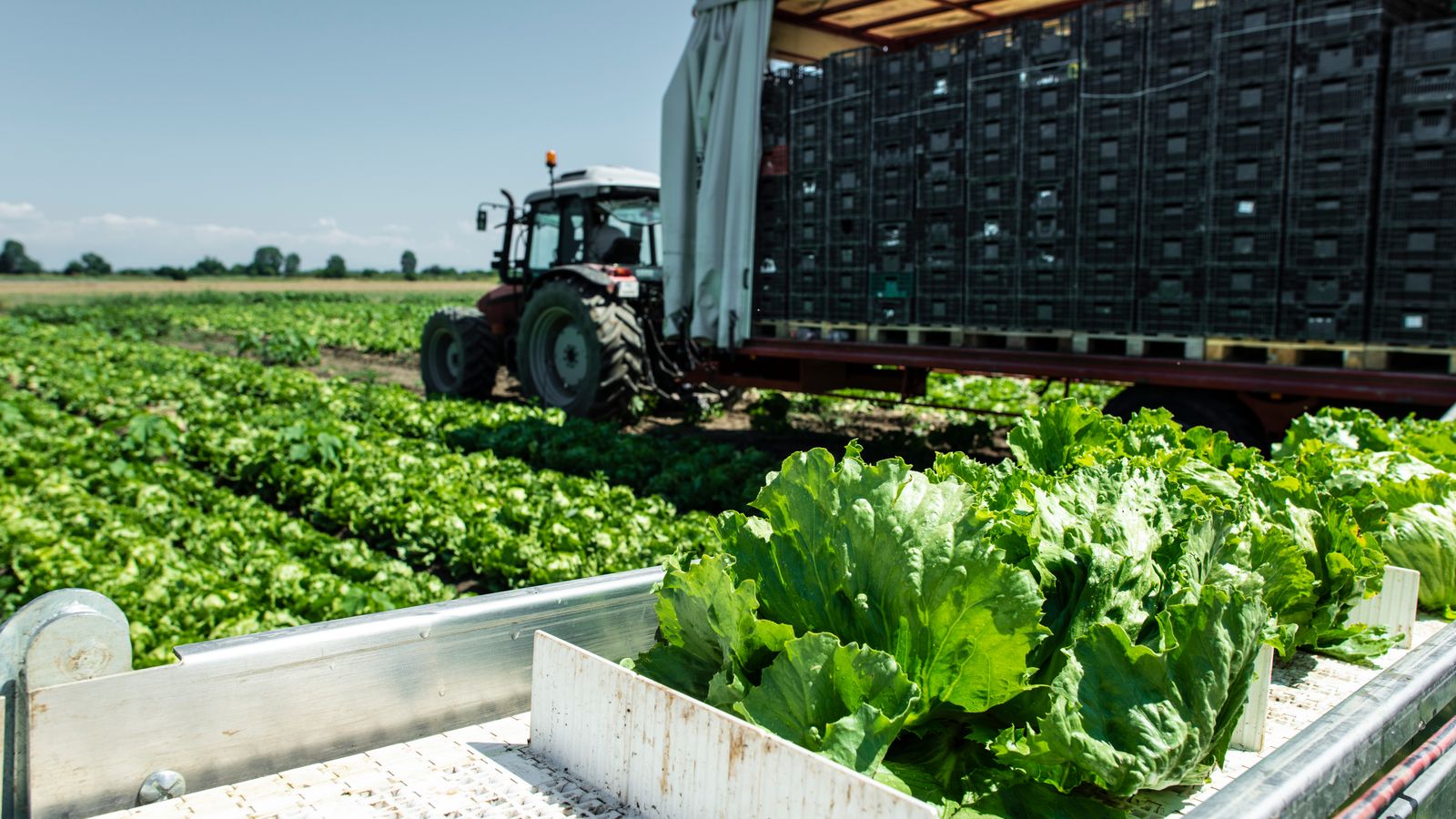
The CDC and FDA say shredded iceberg lettuce supplied by Taylor Farms de Mexico and served at Taco Bell locations in Indiana, Kentucky, Michigan, Ohio, and West Virginia is the likely source, based on illnesses beginning May 13 and running through July 13. Taylor Farms voluntarily recalled iceberg lettuce sourced from central Mexico on July 17 and said the implicated product came from a single farm accounting for less than 1 percent of the country's iceberg lettuce supply. Then, on July 19, the FDA disclosed that the specific lab sample it had cited as testing positive for cyclospora was in fact a false positive — walking back the one piece of direct product evidence in the case, even as the agency maintained that epidemiology and traceback data still point to the same lettuce. Investigators say hundreds of interviews with sick people who ate the same shredded iceberg lettuce, not a single lab result, are what the case actually rests on.
Weeks in, the FDA still can't say with confidence everywhere the implicated lettuce went. Walmart has pulled Marketside-brand iceberg products tied to the same supplier. Jack in the Box confirmed the recalled lettuce reached its restaurants in three states before it had already been swapped for a different supplier. Most of the implicated product, according to a Consumer Reports review of the recall notices, went to food-service distributors rather than direct retail — a detail that shows up in the FDA's version of the recall, not in Taylor Farms' own public statement.
The rule that was supposed to prevent this
Buried inside the Food Safety Modernization Act is Section 204, finalized as the Food Traceability Rule in November 2022 after a food-safety advocacy group sued to force the FDA to issue it. The rule requires any company handling a food on the FDA's Food Traceability List — leafy greens are on it by name — to keep lot-level records at every point the product changes hands, and to hand those records to federal investigators electronically within 24 hours of a request. It is, in other words, purpose-built for exactly this situation: a contamination event where investigators need to know, fast, which field's lettuce ended up at which restaurant.
Its original compliance date was January 20, 2026. The first illnesses in this outbreak began less than four months later. Had the rule taken effect on schedule, the electronic paper trail that would have walked this lettuce back to a single farm would already have been a legal requirement months before anyone got sick.
That didn't happen. The FDA itself proposed pushing the compliance date back 30 months in March 2025, publishing the delay that August. Congress then made the postponement binding, attaching a rider to the FY2026 agriculture appropriations act in November 2025 that barred the FDA from spending any funds to enforce the rule before July 20, 2028. Industry groups had lobbied for the extension, arguing smaller suppliers and distributors weren't ready to comply. They got almost exactly what they asked for. The outbreak now under investigation is unfolding entirely inside the two-and-a-half-year gap that request created.
Without electronic lot-level tracking in force, the traceback here has run on the older method: epidemiologists interviewing sick people about what they ate and where, then working backward through paper invoices and phone calls to suppliers and distributors. That process is why, ten weeks after the first illness, the FDA is still confirming secondary retail exposures and walking back lab results rather than pointing to a settled, documented chain of custody.
A second, compounding factor: the CDC's FoodNet surveillance program dropped cyclospora, along with seven other pathogens, from its active tracking list amid recent budget cuts, according to Consumer Reports' review of the response. Reduced surveillance capacity plausibly slowed how quickly investigators recognized the outbreak's true scope, on top of the traceback delay created by the rule postponement.
The industry already knew
This isn't a risk that caught anyone by surprise. Yum Brands' most recent SEC annual filing named foodborne pathogens — cyclospora explicitly among them, alongside E. coli, listeria, and salmonella — as its single most prominent business risk, ranked ahead of every other threat the company disclosed to investors. Sweetgreen and Arcos Dorados, a major McDonald's franchisee, carried similar language in their own filings, both citing growing reliance on third-party suppliers and distributors as a factor that pushes contamination risk outside the company's direct control. The industry was telling investors, in writing, that this exact scenario was a live and quantified threat, in the same stretch of years it was lobbying regulators to delay the recordkeeping rule built to contain it.
Taylor Farms, for its part, is not a first-time name in outbreak investigations. The company's Guanajuato, Mexico operation was tied to a 2013 multistate cyclospora outbreak linked to salad mix served at Olive Garden and Red Lobster. In 2015, a Taylor Farms celery-and-onion mix was linked to an E. coli outbreak in Costco chicken salad that sickened nineteen people. And in 2024, slivered onions from a Taylor Farms plant were identified as the likely source of an E. coli O157:H7 outbreak tied to McDonald's Quarter Pounders that sickened more than a hundred people across fourteen states and killed one; FDA inspectors subsequently documented poor handwashing practices and unclean equipment at the company's Colorado processing facility. A supplier with that specific a track record is precisely the kind of counterparty the traceability rule was designed to make accountable in near-real time — and precisely the kind of counterparty currently operating without that requirement in force.
Bill Marler, the food safety attorney whose blog has tracked outbreak litigation for three decades, put the evidentiary point plainly while discussing the FDA's retracted lab result: an outbreak case like this "was never built on one test." Jennifer McEntire, founder of the consultancy Food Safety Strategy, was blunter about the outbreak's scale, telling CBS News simply, "this is not normal, and it's not acceptable."
What the stock price actually reflects
Wall Street's read on Yum Brands is, in the narrow sense, correct: analysts covering the stock don't expect the earnings hit to be lasting, since KFC and Taco Bell's international growth — more than 85 percent of the company's operating income — is largely untouched by a regional lettuce recall. But the stock move is pricing a one-quarter reputational scare, not the structural condition that produced it. The actual exposure sitting on Yum Brands' books, and on every other chain that serves fresh produce sourced through a handful of large third-party distributors, is that the federal recordkeeping infrastructure built to contain exactly this kind of event won't be legally enforceable for another two years. Congress didn't fail to notice that gap. It voted to create it, at industry's request, and the bill for that decision arrived considerably sooner than 2028.