Oil traders got a small piece of good news on Friday. Prices pulled back after Reuters reported that Pakistan, at China's urging, is exploring a path back to the negotiating table for the United States and Iran. Stocks had climbed earlier in the session on the same report. It was treated, again, as a signal that the worst is behind the market.
It is worth asking why anyone still trades that signal at face value. This is not the first time in five months that a diplomatic headline out of Islamabad or Beijing has moved oil prices on the promise of stability. It is, by now, at least the third. Each time, the underlying document being celebrated has said something narrower and more temporary than the headline implied — and each time, the market has priced the headline instead of the document.
A truce with a clock built into it
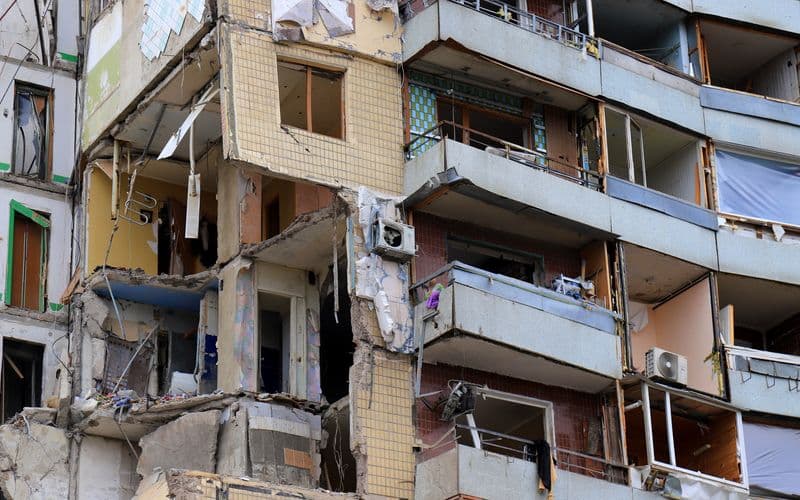
The war itself began on February 28, when the United States and Israel launched strikes against Iran aimed, officials said, at its nuclear and missile programs. Iran's Supreme Leader at the time, Ali Khamenei, was killed in the opening strikes. Iran responded by closing the Strait of Hormuz — the corridor that, before the war, carried roughly a fifth of the world's oil and liquefied natural gas — and the conflict widened into Lebanon as Iran-backed Hezbollah engaged Israel.
A first pause came on April 7–8, after Pakistan announced a two-week ceasefire framework. Iran's Foreign Minister Abbas Araghchi said at the time that Iran would open the strait "if attacks against Iran are halted." Talks in Islamabad on April 11–12 ran 21 hours across three rounds and settled most of a ten-point ceasefire — except, notably, the two issues that mattered most: the administration of the Strait of Hormuz and Iran's nuclear program. Those were the parts left for later.
"Later" arrived on June 17, when President Trump and Iranian President Masoud Pezeshkian signed what became known as the Islamabad Memorandum — a 14-point framework negotiated with Pakistani, and reportedly Qatari, mediation. Trump signed it remotely from Versailles, following a G7 summit; Pezeshkian signed in Tehran. Iran's new Supreme Leader, Mojtaba Khamenei, endorsed the agreement in a written statement despite what he called reservations. Trump declared on social media that the deal with Iran was "now complete."
Here is what the memorandum actually did, according to the U.S. account briefed to reporters and later corroborated by the UK Parliament's own research service: it stopped the fighting, lifted the U.S. naval blockade, and reopened the Strait of Hormuz to toll-free commercial shipping. And it opened a 60-day window — expiring in mid-August — for negotiations on the subjects that had been deferred since April: Iran's nuclear program, sanctions relief, roughly $300 billion in reconstruction financing, and, again, the future administration of the strait itself.
That last item is the one nobody priced. Iran did not sign away its ambitions regarding Hormuz in June. It agreed to talk about them for sixty days, under a toll-free arrangement it had already made clear it did not want as a permanent condition. Iranian negotiators had said for months that they intended to establish a new regime to govern the strait — one that would let Tehran set routes and, per multiple accounts of Iran's position, collect fees on transiting vessels. The memorandum didn't resolve that ambition. It suspended it, with an expiration date, inside a document markets read as a settlement.
The breach was not a surprise — it was the deal working exactly as written
On July 6–7, Iran struck three commercial vessels that had bypassed a shipping route Tehran wanted enforced. This is the detail that gets flattened in most retrospective coverage: Iran was not violating some vague spirit of peace. It was attempting to exercise, unilaterally and by force, the specific authority over Hormuz routing that the June memorandum had explicitly deferred to negotiation rather than granted. The United States escalated strikes in response. On July 7, Trump told reporters he considered the truce over. By July 24, U.S. Central Command had completed a thirteenth consecutive night of strikes on Iranian targets, and Iran was once again holding the strait closed, saying it would remain shut "until the U.S. ends its aggression." Washington, in turn, reimposed the naval blockade the June memorandum had lifted.
Every element of that collapse was foreseeable from the memorandum's own text. A document that reopens a chokepoint on a toll-free, temporary basis while leaving its permanent governance unresolved is not a peace agreement with an implementation problem. It is a bet that sixty days would be enough to convert Iran's core demand into something Washington could accept — a bet that lost.
Why China and Pakistan keep showing up as mediators
The current push to revive talks follows a familiar cast. Chinese Foreign Minister Wang Yi met Pakistani Deputy Prime Minister Ishaq Dar in Shanghai on July 16, urging both sides back to the framework. Wang called the June agreement "hard-won," adding that peace was close and should not be lost at what he described as the final stage. Days later, at a Shanghai Cooperation Organisation meeting in Kyrgyzstan, Wang met Iranian Foreign Minister Abbas Araghchi directly, and Chinese officials say Beijing will keep supporting Pakistan's mediation efforts.
It is worth being plain about why. China is Iran's largest trading partner and the primary buyer of Iranian crude, purchased at a steep sanctions discount. Beijing has also expanded support for Iran's security posture through dual-use components and satellite navigation systems, even as it avoids direct military involvement. A closed or contested Strait of Hormuz threatens the flow of discounted oil China depends on; a fully reopened strait under terms Iran resents threatens the durability of the relationship China has built with Tehran. Framing itself as an honest broker lets Beijing pursue both interests — protecting the trade relationship and avoiding the appearance of taking a side — through a Pakistani intermediary that carries less geopolitical baggage than Beijing would on its own.
That is not a criticism of Pakistan's efforts, which have been real: the Islamabad Talks in April, the Islamabad Memorandum in June, and now a third attempt at reviving talks all trace through Islamabad's mediation. It is simply a reason to read Chinese enthusiasm for "resumed dialogue" as a hedge on trade continuity rather than disinterested diplomacy — a distinction that matters for anyone trying to predict how durable the next framework will be.
What the market should actually be pricing
None of this means the current push toward renewed talks is meaningless. Pakistan's mediation record over the past five months has produced two genuine, if temporary, de-escalations. A third is plausible. But "plausible de-escalation" and "resolution" are different products, and oil markets have consistently priced the latter off the former.
The pattern is now well established enough to trade against, not just react to. Each framework — April's two-week pause, June's 60-day memorandum — has left the one issue that actually drives Iranian behavior, control over Hormuz shipping, unresolved and deferred rather than settled. Each time a deferral period expired without that core issue resolved, fighting resumed. The relevant question for anyone pricing energy risk right now is not whether Pakistan and China can broker another round of talks — they likely can — but whether any new framework finally addresses strait governance directly, or simply resets the same sixty-day clock with a new expiration date attached.
If it's the latter, the appropriate market reaction to Friday's news is not relief. It's a recalculation of when, not whether, the next breach arrives — and a mid-August date that deserves far more attention than it is currently getting, given that it marks the actual expiration of the framework currently being treated as settled.
For now, oil priced a headline. The memorandum, read on its own terms, priced something else entirely.