On July 24, seven climbers from Zenica, Bosnia and Herzegovina, set out from a high camp on Mount Elbrus, the 5,642-meter volcanic massif in Russia's Caucasus range that is, by the standard measure used to rank the Seven Summits, the highest point in Europe. By the following evening, the group had strayed from its route as weather deteriorated on the mountain. One climber turned back early to report that two others in the party had fallen ill. What followed was one of the deadliest incidents on Elbrus in recent memory: five of the seven died, including a married couple and a doctor who worked at a hospital in Zenica, while two survivors were evacuated for medical treatment. Russian rescuers recovered the bodies in stages, at one point locating two of the dead at 5,350 meters and delayed for days in bringing them down because the same storm that killed the climbers made helicopter and ground recovery too dangerous to attempt. Bosnia's foreign minister called it a major tragedy. Investigators in the Russian republic of Kabardino-Balkaria opened a case into the deaths, describing the group as having strayed off-route amid the storm and stating they would examine how the expedition was organized.
It is tempting to read a story like this as a freak event — a sudden, unforecastable act of weather that overwhelmed a well-prepared group. The more uncomfortable truth, and the one that search-and-rescue officials on Elbrus have been saying publicly for years, is that this is closer to routine than exception. Estimates vary because no single authority maintains an official fatality database for the mountain, but figures from Elbrus's own high-altitude rescue service and outside climbing researchers converge on a grim range: somewhere between 15 and 30 people die on Elbrus in a typical year, a toll that, in at least one severe season, reportedly climbed past 40. By the same week the Bosnian group died, Russian regional media were already reporting roughly a dozen deaths on the mountain since the start of the 2026 climbing season, spanning a spectrum from falls and altitude sickness to climbers who simply never turned up at base camp again. For a mountain regularly marketed to first-time trekkers, office team-building groups, and retirees, that is an extraordinary death toll.
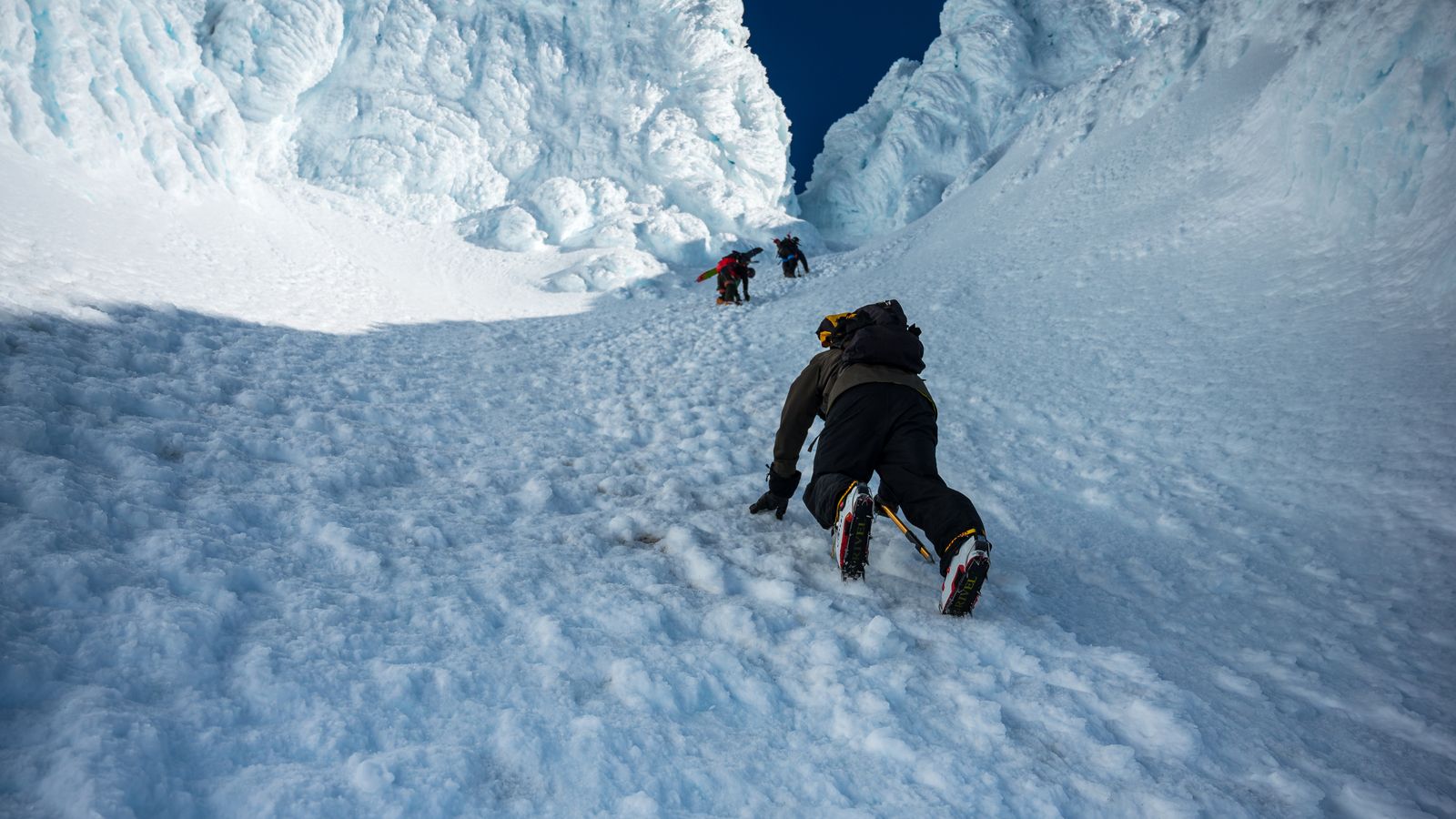
The reason has less to do with the mountain's technical difficulty than with the absence of it. Elbrus's standard south route is, in mountaineering terms, genuinely easy: a long, high-altitude walk on snow and glacier, rated at the low end of international difficulty scales, requiring crampons and an ice axe but none of the rope work, exposed rock climbing, or technical route-finding that define harder Seven Summits peaks like Denali or Aconcagua. A cable car and, in recent years, a snowcat option carry climbers to roughly 3,800 or 4,000 meters before the walking even begins. That accessibility is precisely what makes the mountain dangerous. It draws climbers with little high-altitude experience who reasonably infer, from the absence of technical climbing, that the mountain poses limited risk — and who are then exposed to a summit zone where weather can shift from clear skies to whiteout, sub-zero winds in under an hour, with no natural shelter above the huts and few reliable landmarks once visibility collapses. Search-and-rescue leadership on the mountain has said for years that the overwhelming majority of fatal incidents involve climbers, whether independent or in loosely supervised commercial groups, who continued upward or failed to turn back once conditions had already begun to deteriorate.
That pattern — continuing upward past the point where turning back was still the safer option — is not unique to Elbrus, and it is not unique to this week. In September 2021, five climbers on a commercially guided Elbrus expedition died in almost identical circumstances: a group pushed on toward the summit as conditions held, then was caught by what the guiding company later called an unprecedented storm on the way down. One climber fell ill and died being carried by a guide; two more froze to death during the descent; two others lost consciousness and died before reaching safety. Eleven of the roughly nineteen people on that expedition ended up hospitalized, several with frostbite. A guide who had summited Elbrus more than fifty times told reporters afterward that he had climbed in similarly rough weather before without incident, and suggested only in hindsight that the group might have turned around sooner.
That is where the more interesting question sits: not what killed these five people, or the five before them in 2021, but what leads capable, well-informed adults to keep climbing toward a summit as conditions turn against them. Mountaineering researchers and search-and-rescue organizations have a name for the phenomenon, and it shows up in incident reports from Everest to the Alps to the Rockies with striking regularity: summit fever, the tunnel-vision fixation on reaching a specific goal that overrides the risk-mitigation instincts a climber would otherwise trust. Writing in the sport's standard reference text, Mountaineering: The Freedom of the Hills describes an unchecked desire to reach the summit as the single most common bias behind poor decisions in the mountains — more common, notably, than equipment failure, inadequate fitness, or bad luck with weather. Climbing researchers and guides who study near-miss and fatality reports describe the psychology in similar terms: an intense narrowing of attention onto the goal itself, which makes it progressively harder for a climber, or a group, to register the warning signs — a flagging teammate, a shifting sky, a route marker that no longer matches the map — that would ordinarily prompt a retreat.
Altitude itself compounds the problem in a way that is easy to underestimate from sea level. Even moderate hypoxia measurably degrades judgment, working memory, and risk assessment, and researchers who have interviewed elite high-altitude climbers have documented hallucinations, disorientation, and impaired decision-making setting in well before a climber reaches anything resembling a medical emergency. A climber operating at 5,000 meters or above is, cognitively, not the same person who planned the route at sea level with a full night's sleep and clear thinking. Layer in physical exhaustion, cold, dehydration, and the accumulated sleep debt of a multi-day expedition, and the decision to press on for another hour rather than turn around starts to look less like a conscious risk calculation and more like a brain running on compromised hardware defaulting to its most recently reinforced goal.
There's a social dimension too, one that mountaineering incident investigators return to again and again. Group dynamics on a summit push create their own pressure independent of any individual's judgment: turning around means admitting failure in front of teammates, disappointing people who have trained and paid and traveled for the same goal, and being the person who ends the attempt for everyone else. Guides on commercial expeditions, whose income and reputation are tied to summit success rates, face a milder but real version of the same incentive. None of this requires recklessness or incompetence to produce a fatal outcome — it only requires a group of otherwise careful people to each individually defer their own doubts by a few minutes, at altitude, in deteriorating weather, on a mountain whose reputation as "easy" has already lowered everyone's guard before the climb even began.
None of this diminishes what happened to the climbers from Zenica, and Elbrus's search-and-rescue teams, who operate in conditions that make their own work dangerous, deserve real credit for recovering as many people alive as they did. But the recurring nature of these tragedies — a toll in the double digits nearly every year, on a mountain most climbers are told to think of as one of the "easy" Seven Summits — points to something more structural than misfortune. The danger on Elbrus was never really the technical grade of the route. It's the gap between how hard a mountain looks on paper and how quickly a body and a mind stop functioning normally once storm, altitude, and the pull of a goal already in sight combine at 5,000 meters with no way down but forward.