President Trump announced Friday that the United States will waive out-of-quota tariffs on up to 300,000 metric tons of imported ground beef for the next 90 days, in an effort to bring down record grocery prices for beef.
Trump made the announcement in a post on Truth Social Friday morning, saying the administration had reached a deal with foreign beef exporters to import the beef tariff-free over the next three months. He said exporters had committed to selling the beef at "25 percent below current market prices."
A White House official said the administration is also working with domestic ranchers to expand beef production over the long term, describing Friday's move as a short-term step to let foreign imports fill a supply gap while U.S. herds grow. Trump said the deal would lower prices for Americans while giving the domestic cattle herd room "to grow again."
How the tariff system works
Under the existing tariff-rate quota system, importers pay steep duties once foreign beef volumes exceed set limits. A report from the American Farm Bureau Federation noted that imports entering under quota generally face a tariff of just 4.4 cents per kilogram, while imports above quota face a 26.4 percent tariff — a difference that can exceed $1.80 per kilogram for beef valued around $7 per kilogram. By waiving the out-of-quota tariff for 90 days, the administration is clearing the way for a larger short-term supply of cheaper, lean manufacturing beef used in ground beef production.
The tariff-rate quota system for beef is administered under World Trade Organization rules and sets country-specific volume limits for how much beef can enter the U.S. at the lower duty rate each year. Once a country's exporters exceed that limit, any additional beef shipped to the U.S. is subject to the much higher out-of-quota rate. Friday's waiver applies specifically to lean beef trimmings, the cuts most commonly blended into ground beef, rather than to higher-value cuts like steaks or roasts.
Friday's move is not the administration's first attempt to use imports to bring down beef prices. In October, Trump suggested that purchasing Argentine beef could help lower prices. In February, he signed a proclamation temporarily increasing the tariff-rate quota for lean beef trimmings, and separately signed an order increasing beef imports from Argentina by 80,000 metric tons. Both of those earlier actions were also framed by the White House as temporary measures meant to hold down prices while domestic producers rebuilt their herds.
Why prices have climbed
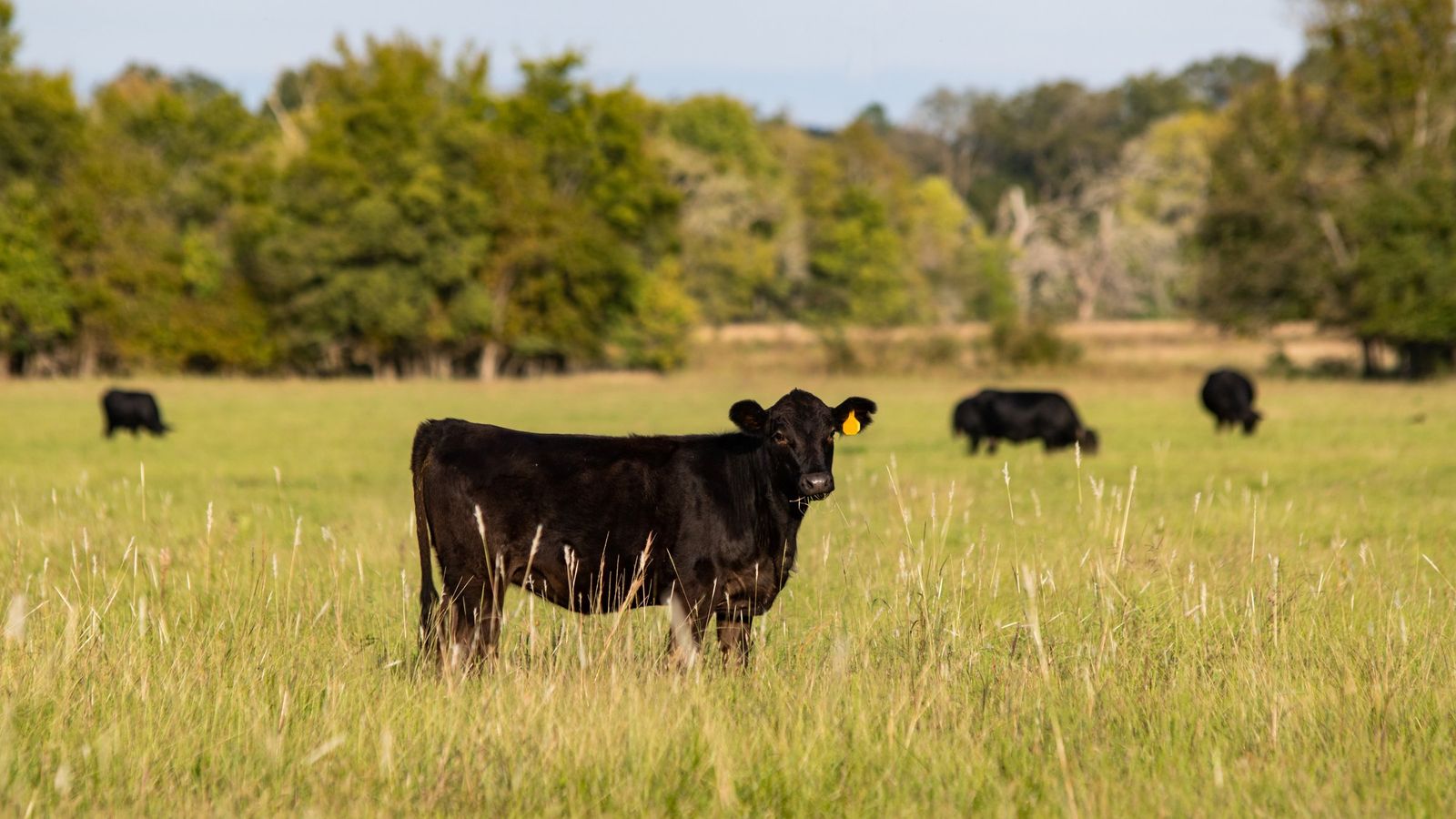
Beef prices have surged in 2026 amid a sharp reduction in the U.S. cattle herd, driven by years of drought, high feed costs, and herd liquidation by ranchers. The national cattle herd is now at its smallest size since the 1950s. Total cattle and calf inventory stood at 94.2 million head as of July 1, up less than 1 percent from a year earlier — the first monthly increase in the herd since 2018, according to the Farm Bureau.
Beef prices have also been pushed higher by limits on cattle imports from Mexico, where livestock have faced a flesh-eating screwworm pest, and by a 50 percent U.S. tariff on beef from Brazil, one of the world's largest beef exporters. Rebuilding a cattle herd is a multi-year process: ranchers must first hold back young female cattle from slaughter to breed rather than sell, and calves generally take about two years to reach slaughter weight after that decision is made. That timeline means herd expansion announced or encouraged this year would not meaningfully add to the beef supply until at least 2027 or 2028, regardless of near-term trade policy.
Grocery prices for beef have been one of several inflation flashpoints cited by consumers and lawmakers over the past year, alongside costs for eggs, coffee, and other staples. Ground beef in particular has drawn attention because it is a high-volume purchase for many households and a common ingredient in lower-cost meals, making price increases more visible to consumers than moves in higher-end cuts.
Industry and political reaction
The announcement drew immediate criticism from cattle industry groups and Republican lawmakers in ranching states. National Cattlemen's Beef Association CEO Colin Woodall said the move was the third time in under a year the administration had turned to imports to lower beef prices, and argued the president is "missing the point" on what is actually driving beef prices — strong, sustained consumer demand rather than a supply shortfall that imports alone can fix.
The American Farm Bureau Federation also responded to the announcement, warning that short-term measures could carry long-term negative effects for both consumers and ranchers.
Several Republican senators from cattle-producing states also pushed back. Nebraska Senator Deb Fischer said flooding the market with foreign beef undermines the long-term goal of growing the domestic herd. Montana Senator Tim Sheehy said the president's "heart is in the right place" but that the policy would still hurt ranching families. Nebraska Senator Pete Ricketts said he appreciated the administration's focus on grocery prices but that short-term shifts are not a substitute for long-term solutions.
Industry adviser Scott Varilek, who works with cattle producers in the Upper Midwest, said the scale of the planned imports has frustrated ranchers he works with, noting that the 300,000 metric tons under the plan equates to roughly 44 days of total U.S. ground beef consumption.
Utah Representative Celeste Maloy said ranchers had contacted her office about the announcement, which came shortly after Tyson Foods announced it would close its case-ready meat facility in Eagle Mountain, Utah, eliminating more than 700 jobs as part of a broader restructuring of its beef processing network amid the tight national cattle supply. The timing added to frustration among producers in the region.
Not all reaction to the announcement was negative. Consumer advocates and some grocery industry representatives welcomed the move as a step toward relief for shoppers, arguing that ground beef prices had climbed to levels that were increasingly difficult for lower- and middle-income households to absorb. The White House has pointed to grocery affordability broadly as a priority heading into the fall.
Market reaction
Live and feeder cattle futures fell Friday following Trump's announcement, a decline market participants attributed to the prospect of a larger near-term beef supply. Democratic lawmakers in competitive districts also pointed to the announcement in criticizing the administration's handling of grocery prices, an issue that has weighed on Republicans ahead of the November midterm elections.
What comes next
The tariff waiver is set to last 90 days. A White House official said the plan had not yet been finalized as of Friday and that Trump intends to sign an executive order formalizing the waiver within two weeks. The administration has not detailed what trade policy will apply to ground beef imports once the 90-day window closes, and it has not specified benchmarks for domestic herd growth that would determine whether additional import measures are needed.
Friday's action marks the third distinct step the administration has taken in less than a year aimed at using foreign beef imports to address rising U.S. grocery prices, following the October purchase suggestion and the February tariff-rate quota and Argentina import actions.
The White House has not said which countries beyond Argentina would supply beef under the new waiver, or how the 300,000-metric-ton cap would be allocated among exporters. Trade groups representing importers said they expected shipments to begin arriving within weeks of the announcement, though logistics for scaling up trimmings exports on short notice could affect how quickly the full volume reaches U.S. processors.