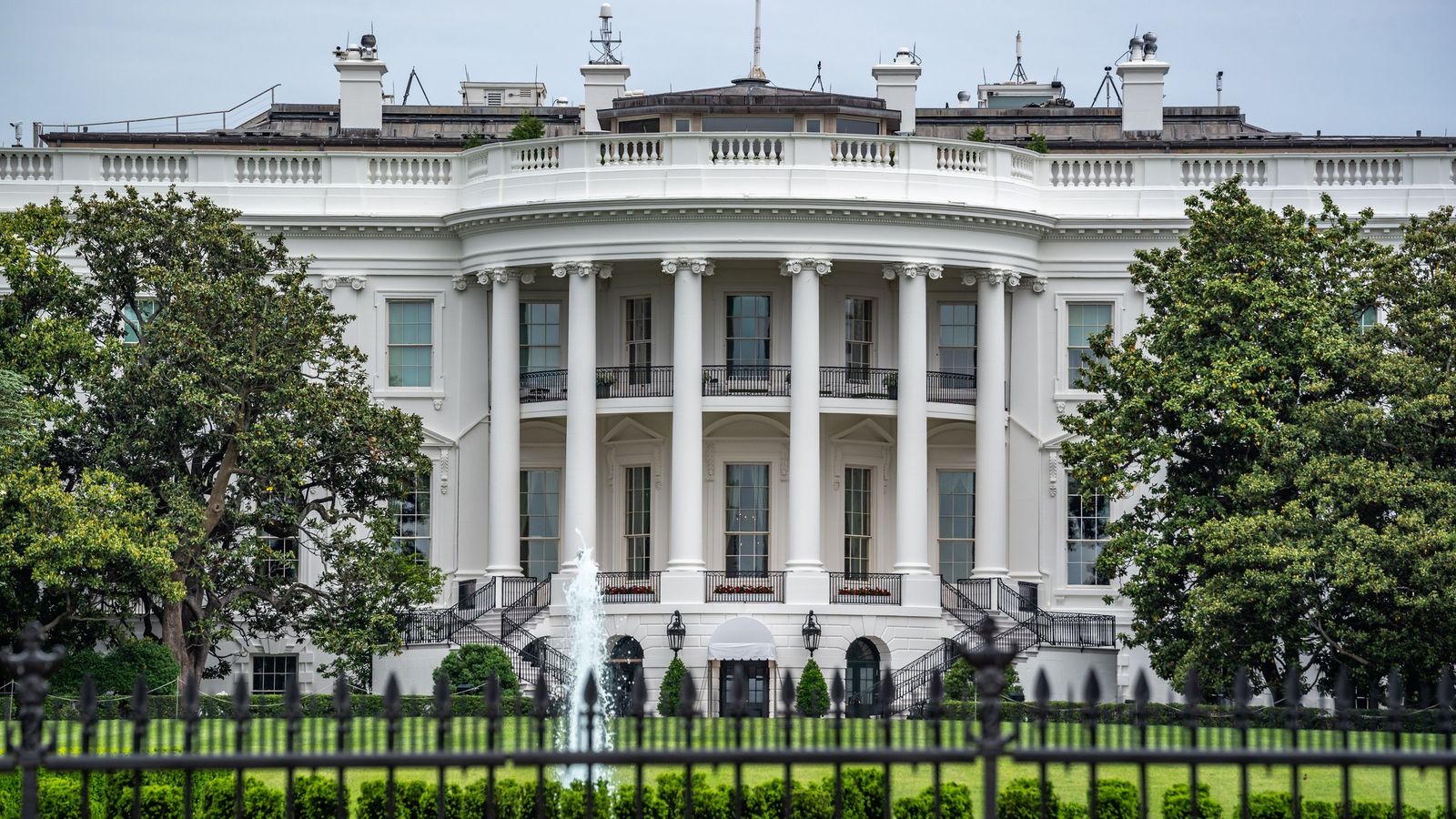
President Donald Trump announced Friday that he is banning CNN, MS NOW and Politico from the White House, accusing the three news organizations of publishing what he calls fake news and warning that other outlets could soon face the same treatment. By Saturday morning, reporters from all three outlets said they had been turned away at the gate and had their passes taken, setting up what First Amendment advocates and legal analysts expect to be a new court fight over how much control a president has over who covers him.
The announcement came in a Truth Social post declaring the ban effective immediately. Trump wrote that news organizations should not be allowed to keep reporting what he described as fiction and lies while covering the president, his administration or the country, and he added that other outlets would follow. Later Friday afternoon, in the Oval Office, he defended the decision in exchanges with reporters.
What Trump said
Asked what prompted the move, Trump did not point to a specific story. He told reporters the decision reflected what he called cumulative coverage over the past several years, according to Reuters and TIME, and said he had grown tired of it. Pressed on how he could justify barring three news organizations, he answered that the outlets are fake news, CNN reported, and he argued that something is wrong with a country that allows reporters to write purposely negative stories. "I don't have to let them into the people's house," he said, as CNN recorded it.
The president offered few details about how the ban would work. Asked what it would look like, he described it as a simple ban, said he did not want the outlets in his office or around him, and said it would go as far as possible, CNN reported. He also suggested the restriction could be lifted if the outlets straightened themselves out and published more favorable coverage.
Asked whether a court might strike the ban down, Trump told reporters, as TIME reported, that it was worth pointing out whether it survives. He said he did not think a court should allow fake news to be written day after day. When CNN asked the White House Press Office for comment on the post, the office referred the network back to the president's remarks.
Trump's post also included a claim about Politico specifically: that the federal government paid roughly $8 million for subscriptions to the outlet, NBC News reported. NBC noted that the claim stems from the administration's assertion in early 2025 that its DOGE effort had found such payments. A Politico spokesperson told Courthouse News the claims are false and have been thoroughly debunked.
Enforcement unclear at first, then apparent
On Friday, there was little sign the administration had taken concrete steps to carry out the ban. Reuters reported that representatives of all three outlets could be seen working inside the White House that afternoon. CNN reporters stayed in their White House workspace into the evening, CNN reported, and a CNN team was traveling as the assigned television pool reporters with Vice President JD Vance. According to CNN, which cited a source familiar with the matter, some White House staffers, including members of the press shop, were caught off guard by the announcement and scrambled to learn how it would affect daily operations.
That changed Saturday morning. MS NOW correspondent Akayla Gardner said on air that her White House badge did not work when she arrived. She said an officer asked her to hand it over and told her it had been disabled, and that when she asked why she could not enter, the officer said the decision was above him. CBS News observed Gardner and a cameraman being turned away around 8 a.m., with both having their hard passes revoked. CNN reporter Betsy Klein was also denied entry and had her press pass seized, CNN reported, and Politico said its White House reporter, Cheyenne Haslett, was turned away and had her badge confiscated, according to The Associated Press. The AP noted that Politico reporters are not typically at the White House on Saturdays, and that Trump was at Camp David this weekend.
The White House had not, in the reporting reviewed for this article, publicly described the formal basis for disabling the passes or whether the revocations are meant to be permanent.
Outlets and press groups respond
MS NOW said in a statement posted to X that the White House belongs to the American people and that the decisions made inside it are funded by taxpayers. The network said it intends to take "any and all steps necessary" to defend its First Amendment rights and the role of independent journalists.
CNN said in a statement that it has a constitutional right to do its reporting without government interference and that its mission to cover the government will continue regardless of efforts to restrict physical access. The network called the ban an "illegal assault" on that right. CNN also reported that all three organizations signaled they will take legal action.
Politico said it would continue to report fairly on the current White House and future ones, and that it would "vigorously defend our First Amendment rights against any attempt to restrict them."
The White House Correspondents' Association, the organization that represents the press corps, issued a statement of solidarity. Its president, Fox News reporter Jacqui Heinrich, said the group stands with its colleagues at the three outlets, who she said are being singled out for doing their jobs. "The Constitution protects the freedom of the press from government interference," she wrote. She added that the protection does not depend on whether the president likes an outlet's coverage, agrees with its reporting or approves of the questions its journalists ask.
CNN reported that the country's leading First Amendment groups said an attempt to implement a ban would be unconstitutional and would be rejected by the courts.
Criticism also came from outside the outlets' usual defenders. Fox News legal analyst Jonathan Turley called the move "an assault on long-honored principles of a free press," according to Mediaite, while noting that he has criticized the targeted outlets' bias himself. Mediaite also reported that Niall Stanage, The Hill's White House columnist, wrote that under almost all readings of the First Amendment the government cannot discriminate against reporting or opinions it simply dislikes.
The legal landscape
Reuters reported that free speech experts consider the ban in conflict with First Amendment protections for speech and a free press, and that it is almost certain to face legal challenges. The outcome, Reuters noted, could depend on the ban's scope. Courts have given presidents broad discretion over selective access to events such as Oval Office meetings and small press pools, the wire service reported, while broader exclusions from generally available press facilities or credentials could face stronger challenges under the First Amendment and due process protections.
Two earlier disputes frame the question. In 2018, during Trump's first term, the White House revoked the press credentials of then-CNN correspondent Jim Acosta after a contentious exchange at a news conference. CNN sued, and the restriction was overturned, TIME reported.
More recently, the White House barred Associated Press reporters from the Oval Office, Air Force One and other limited-space events in early 2025 after the AP declined to change its stylebook to use "Gulf of America" in place of Gulf of Mexico. The AP sued. U.S. District Judge Trevor McFadden, a Trump appointee, ruled in April 2025 that the government cannot open its doors to some journalists and then shut them to others because of their viewpoints. In June 2025, a divided panel of the D.C. Circuit stayed that order while the appeal proceeds, though not as it applied to the East Room. Judge Neomi Rao, joined by Judge Gregory Katsas, said the injunction intruded on the president's control over his private workspaces and that the White House was likely to prevail. Judge Cornelia Pillard dissented, writing that the ruling could not be squared with a sensible understanding of the press's role in a constitutional democracy. TIME reported Friday that the AP case remains ongoing.
That split matters for the new ban. The AP ruling turned largely on the nature of the spaces involved, with the appeals court treating restricted presidential areas as different from places open to the general press. Whether the new restrictions stay limited to spaces like those or reach the credentialed press workspace and grounds could shape how any challenge unfolds.
A separate line of precedent covers the credentials at issue Saturday. In the 1977 case Sherrill v. Knight, the D.C. Circuit held that once the White House makes press facilities available to credentialed journalists, it cannot deny access based on the content of their coverage, Al Jazeera reported. Under that ruling, any denial must serve a compelling government interest, and the journalist must receive notice, a chance to respond and a written final answer. The appeals court reaffirmed the principle in its June 2025 AP order, which said hard passes may not be denied arbitrarily or based on the content of a journalist's speech, while stressing that the White House retains latitude over security and space limits. CBS News reported that the two MS NOW staffers it saw turned away Saturday had their hard passes revoked.
What is at stake for the press corps
The White House has historically maintained regular access for journalists from a broad range of outlets, letting them question the president, attend briefings and document the executive branch, TIME reported. CNN has been part of the traditional five-network television pool that follows the president and supplies coverage of his appearances to other outlets. The pool arrangement means that restrictions on one member can affect what the rest of the press corps and the public see.
The administration has repeatedly called itself the most transparent in history, pointing to the president's frequent exchanges with reporters, TIME reported. White House press secretary Karoline Leavitt said in 2025 that the White House would widen eligibility for press credentials to include content creators and social media influencers, citing low public trust in traditional media.
A broader pattern
The ban follows a series of confrontations between Trump and the news industry. Since returning to office, he has pursued legal action against The New York Times, The Wall Street Journal and the BBC over reports he objected to, TIME reported. A judge threw out the Times suit in 2025 as improperly drafted, and Trump refiled it. A federal judge dismissed the Journal suit in April 2026 without prejudice, allowing an amended complaint. NBC News reported Saturday that both suits have since been refiled, while the BBC has asked a court to throw out its case.
Trump has also used access as leverage before. During the 2016 campaign, his team barred outlets including The Washington Post, Politico and BuzzFeed from covering his events, then ended the practice that September. Campaign spokeswoman Hope Hicks announced the reversal at the time.
What comes next
Several questions remain open. It is not yet clear whether the White House will issue formal notice of the revocations, how long they will last, or which additional outlets Trump has in mind when he says others will follow. None of the reports reviewed indicated that CNN, MS NOW or Politico had filed a lawsuit as of Saturday, although CNN reported that all three have signaled they will pursue legal action.
For now, the practical effects are being sorted out at the White House gate. CNN's traveling pool reporters remained on assignment Friday, while reporters from all three outlets were turned away Saturday. How courts respond, if the outlets sue, will likely turn on how far the administration ultimately extends the restriction and on how judges weigh a president's authority over his workspace against the First Amendment's protection of the press.