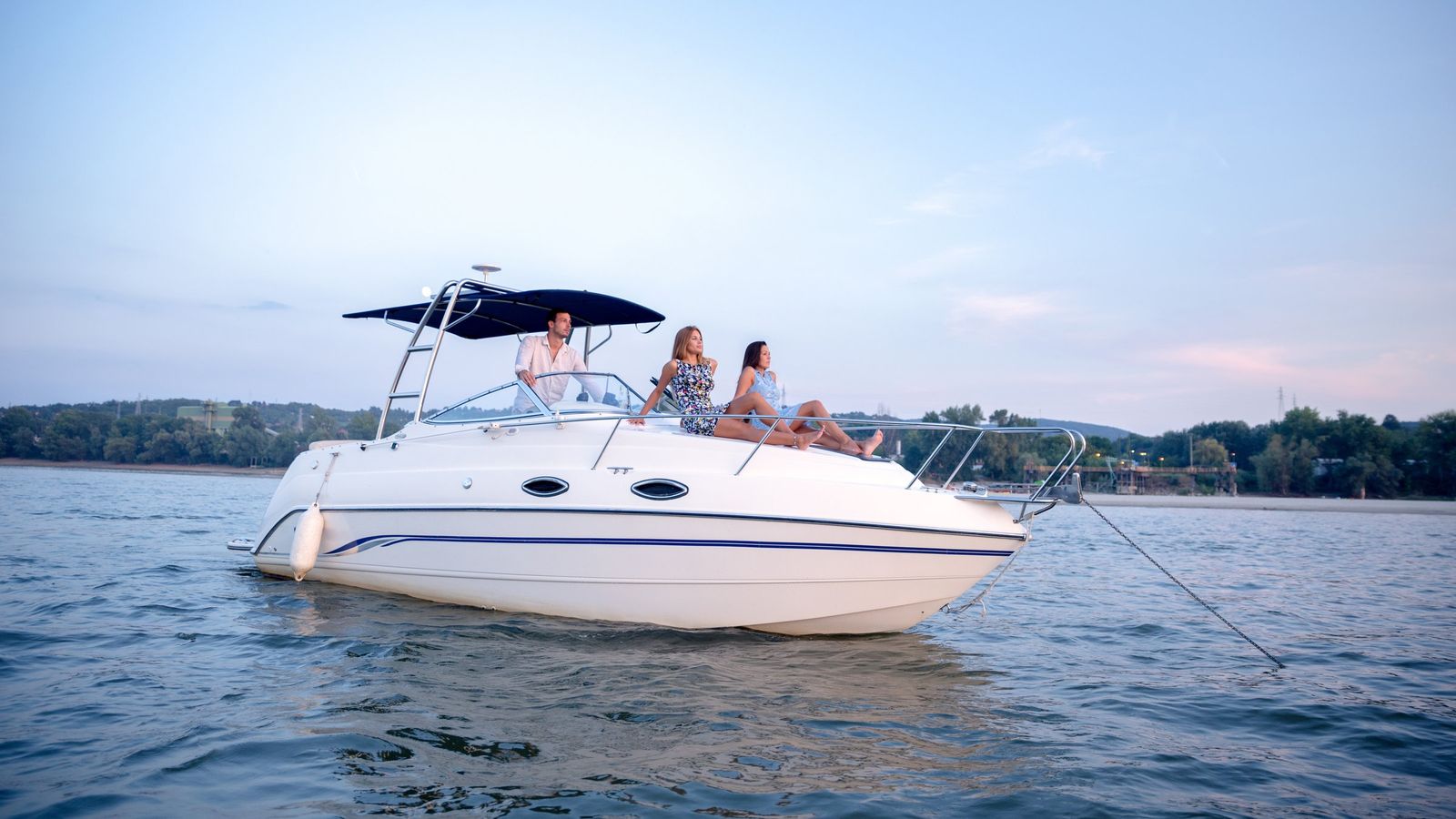
The listing price on a boat is the most visible number in the whole transaction, and for many first-time buyers it is also the smallest one that matters. Once the paperwork is signed, a stream of recurring bills begins, and it does not stop for as long as the boat is yours. Insurance, storage, maintenance, fuel, taxes, and the quiet loss of value all compete for the same budget, and most of them arrive whether or not you ever leave the dock.
That is not a reason to skip the dream. It is a reason to price it honestly. Here is what first-time buyers should expect once the purchase price is behind them, using ranges from marine surveyors, marinas, and boating-cost guides. Every figure below is an estimate that shifts with region, boat type, age, and how you use the boat, so treat these as planning ranges rather than quotes.
Start with the rule of thumb everyone repeats
The most common shortcut in boating is the 10 percent rule: budget roughly 10 percent of a boat's value each year for maintenance. Bankrate and several marina and cost-calculator sites cite it, and on a $50,000 boat that works out to about $5,000 a year before fuel, storage, insurance, or registration are counted.
The rule is a starting point, not a law. A calculator published by FindABoat.io breaks maintenance down by age instead, putting new boats near 1.5 percent of value per year, boats four to ten years old near 3 percent, and older boats near 5 percent. Another boating-cost guide suggests a reserve of 2 to 3 percent of value. The Boat Galley, a cruising resource, argues that a higher-priced boat does not automatically cost more to maintain than a cheaper one with older systems and deferred work. The lesson is that the range is wide, so the best protection is knowing the specific boat you are buying.
If you finance the purchase, the picture gets heavier. BoatCalcs estimates that once you add a typical loan at 7 to 8 percent over 10 to 15 years plus early depreciation, the real annual cost of ownership lands closer to 20 to 25 percent of the purchase price.
The cost before you own it: taxes and the survey
Sales tax is the first surprise. Rules vary by state, and the tax generally follows where the boat will be used, not where it was purchased. Five states have no general sales tax, which are Alaska, Delaware, Montana, New Hampshire, and Oregon, though Alaska allows some local taxes and at least one tax guide also lists Rhode Island as tax-free for boats. Buying in one of those states does not settle the question. BoatUS has explained, as reported by Scuttlebutt Sailing News, that registering the boat in a taxed state later can trigger that state's tax.
Florida is the best-known special case. Its Department of Revenue states that boats are subject to a 6 percent sales and use tax, with the maximum tax on a boat capped at $18,000. That cap is reached at a $300,000 purchase price. For a typical first boat, the cap is irrelevant and you simply pay the full percentage. Some online guides cite a higher Florida rate, so check the state revenue agency directly before you budget.
Then there is the marine survey. If you are buying a used boat, a pre-purchase survey is the closest thing to an independent physical exam. Surveyors usually charge by the foot, and published rates vary. One survey guide puts pre-purchase inspections at $20 to $45 per foot, and many individual surveyors post minimums around $500 to $550. Haul-out, which lifts the boat so the hull can be inspected, is often billed on top of that. A marine inspection guide lists short-haul fees at $10 to $15 per foot, and engine inspections by a separate marine mechanic at $100 to $180 an hour. For a 25-foot boat, a realistic all-in inspection budget is somewhere between roughly $800 and $1,600, and larger boats cost more.
That is real money to spend on a boat you might not buy. It is also the cheapest way to avoid inheriting a five-figure engine or structural problem. One boat-history service puts the worst case for an engine failure at up to $20,000.
Insurance: cheaper than you fear, unless you live in hurricane country
For most recreational boats, insurance is a modest line item. Several cost guides put premiums at 1 to 2 percent of a boat's value per year, which is $500 to $1,000 for a $50,000 vessel. Estimates do vary. Some insurance guides cite $200 to $500 a year for small boats and up to 5 percent of value for larger or pricier ones. A cost calculator from FindABoat.io says pontoons and sailboats tend to be cheaper to insure, while personal watercraft and high-performance boats cost more, and Boat Pass Club notes that location, boating experience, and claims history all move the price.
Location matters most on the coast. The Boat Galley advises budgeting at least 5 percent of a boat's value per year for hull coverage in hurricane-prone areas, with a substantial deductible, and notes that some marinas in hurricane country require boats to leave during named storms. That is one experienced boater's estimate rather than an industry standard, but it illustrates how sharply the number can climb in exposed regions. If a lender is involved, it may ask for proof of coverage.
Some states also tax boats as personal property. BoatCalcs notes that this can run 1 to 3 percent of assessed value annually where it applies, so ask your state or county before you commit.
Where the boat sleeps: slips, racks, and trailers
Storage is the cost that most surprises first-time owners, because it is charged every month whether you use the boat or not. The options fall into three broad tiers.
A wet slip keeps the boat in the water and ready to go. It is the most convenient option and the most expensive. Morningstar Marinas cites wet slip rates of $15 to $50 per foot per month, which is $330 to $1,100 monthly for a 22-foot boat. Rates in expensive markets go higher. One Miami guide reports $28 to $38 per foot per month at a major city marina in 2026.
Dry stack storage, where a forklift launches your boat on request, usually costs less. Captain's Preferred Products puts it at $10 to $30 per foot per month, and it protects the boat from sun and waterline growth. The tradeoff is scheduling. Some facilities cap free launches each month and charge fees beyond that.
Trailer storage is the cheapest by a wide margin. Boatzon lists outdoor trailer storage at $50 to $100 a month for smaller boats, and storing the boat at home can cut the cost to nothing, though you will need a tow vehicle and a nearby ramp. Ramp launch fees and trailer costs, which start around $700 according to Bankrate, are the price of that freedom.
For many first-timers, this single choice decides whether boating is affordable. BoatSign puts the annual slip cost for a 30-footer at $5,400 to $18,000 in Florida, compared with $2,250 to $6,000 in the Northeast.
Maintenance, haul-outs, and the things you forget
Beyond the percentage rules, the recurring chores are specific. Oil changes, impellers, belts, zinc anodes, and detailing are routine. Boats kept in salt water need bottom paint and periodic haul-outs. The Boat Galley estimates that hauling, cleaning, and repainting the bottom of a 38-foot boat can run $2,000 to $4,000. In cold climates, winterization and spring commissioning are annual costs that new owners often leave out of the budget.
Two other line items are easy to forget. The first is fuel. One cost guide estimates annual fuel spending for a powerboat at $2,000 to $10,000 depending on how far and how often you go, and a used-boat guide puts hourly fuel burn at $40 to $75 or more. The second is towing coverage. BoatUS lists its saltwater towing membership at $215 a year and its freshwater membership at $130, and Sea Tow prices its own plans separately. That is inexpensive protection against a long wait and a large bill.
Depreciation: the bill you never receive
Depreciation does not show up on any statement, but it is often the largest cost of owning a boat. Guides commonly report that new boats lose 15 to 25 percent of their value in the first year, then 5 to 10 percent annually after that. Money.com, as cited by Morningstar Marinas, reports that new boats can lose 20 to 30 percent within five years. Used boats generally lose value more slowly, which is one reason many first-time buyers are steered toward them.
The takeaway is not to avoid new boats. It is that if you plan to sell or trade up, the price you paid and the price you will get can be far apart.
How to keep the total under control
A few practical moves come up repeatedly in cost guides.
Buy in the off-season. Bankrate suggests buying in fall or winter when demand and prices tend to be softer, which makes this a good time of year to shop.
Match the boat to your actual use. Powertime Boating says many owners use their boats far less than they expect, though it does not give specific figures. A boat used twice a month can become an expensive asset when costs are divided by days on the water.
Consider alternatives. Boat Pass Club, which operates a boat club and has an interest in the comparison, says a membership is significantly cheaper than ownership for people who boat one to three times a month. Bankrate also points to shared ownership among friends or family and fractional ownership as ways to split the load.
Build the budget before the offer. Add insurance, storage, maintenance, fuel, registration, and a depreciation allowance to your loan payment. If the total makes your household budget uncomfortable, look at a smaller or older boat, or a cheaper storage tier.
The honest math
Consider a used $50,000 boat kept on a trailer at home. Insurance at 1 to 2 percent is $500 to $1,000. Registration, which one calculator puts at $150 to $500 a year in many states, adds a little more. Maintenance at the 10 percent rule is about $5,000, or less if you use the age-based estimates for a newer boat. Fuel might add a few thousand dollars. Move that same boat into a wet slip and you may add several thousand dollars a year in storage alone.
None of this makes boating a bad idea. Plenty of people find the cost worthwhile for weekends on the water. The ones who enjoy it most are usually the ones who priced the whole picture in advance, chose a boat and storage arrangement that fit their real habits, and paid for a survey before they signed. Before you fall for a listing, work out the yearly bill first, and then decide whether the boat still looks like a bargain.