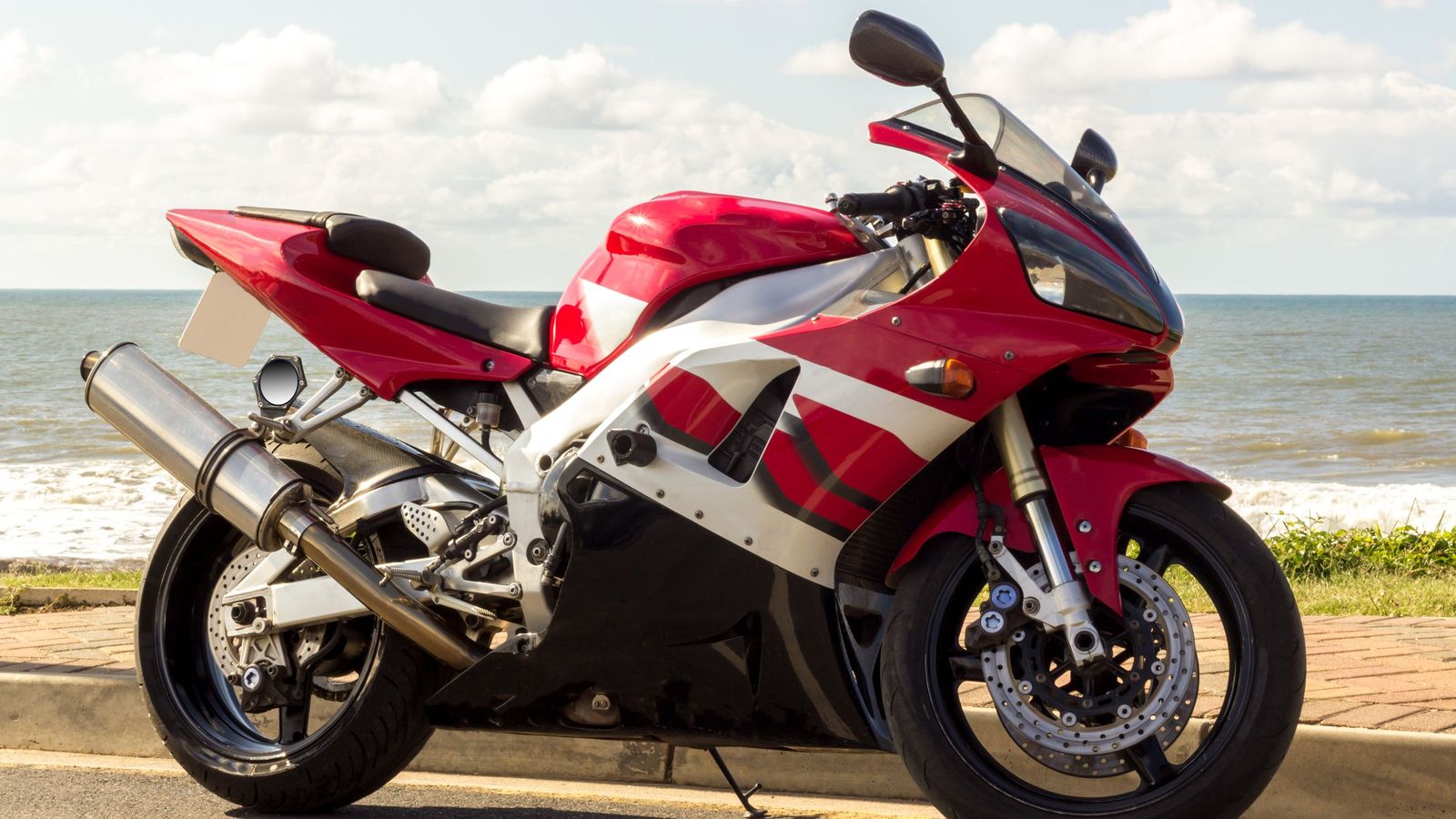
Ask almost any rider about resale value and you will hear some version of the same claim: motorcycles hold their value better than cars. It sounds right. Bikes cost less up front, get ridden far less than cars, and often come with the kind of brand loyalty most sedans can't match. The idea has been repeated so often that it passes for common knowledge.
The numbers do not support it, at least not for the bike on the showroom floor. A new motorcycle loses value at a pace that looks roughly in line with the average car, and the best recent data on cars makes the comparison uncomfortable for the myth. The real advantage of motorcycle ownership shows up a few years later, in the used market, where someone else has already absorbed the steepest part of the drop and the way people actually ride makes secondhand bikes unusually cheap to hold. That is a different claim from "motorcycles hold their value," and it is the one worth building a purchase around.
What the car data says
The best recent benchmark for cars comes from iSeeCars, which analyzed more than 950,000 five-year-old vehicles sold in the United States between March 2025 and February 2026. Across all vehicles, the average five-year loss came to 41.8 percent of original value, or roughly $16,571, according to coverage of the study from outlets including Ford Authority and Money Talks News. That was an improvement of 3.8 points over the prior year's 45.6 percent. iSeeCars executive analyst Karl Brauer attributed the improvement to rising used-car demand, insufficient supply, or both.
The average hides a wide spread. Trucks lost 34.2 percent over five years, hybrids 35.4 percent, and electric vehicles 57.2 percent. Individual models ranged from the Porsche 718 Cayman at 9.6 percent to the Nissan Leaf at 63.1 percent. Any claim that motorcycles beat cars has to beat a moving target, because "cars" is not a single category.
What the motorcycle data says
A motorcycle equivalent of the iSeeCars study is much harder to find. A search turns up mostly marketplace blogs, retailer guides and enthusiast sites rather than a large transaction analysis from a neutral data firm, so the figures below are best read as informed estimates, not settled fact. They also disagree with one another, which is part of the story, and they are not directly comparable with the car numbers. iSeeCars measures actual sales of five-year-old vehicles against original sticker price, while the motorcycle figures rest on listing data, price guides and one rider's calculations.
The online marketplace Cycle Trader says in its 2023 depreciation guide that the first year brings the heaviest loss, often 20 to 30 percent, with the annual rate easing to around 10 percent by year five. The riding site webBikeWorld puts the first-year hit at up to 20 percent. The enthusiast site Motorcycle Habit, which averaged the depreciation of the 30 best-selling models in the United States, describes a similar shape. In its example, a Harley-Davidson Sportster 883 lost about 18 percent in year one, another 6 percent in year two, and roughly 5 percent a year after that. Across its 30-bike sample, the site found an average loss of about 48 percent after nine or ten years.
Add the Sportster steps together as a rough estimate and the five-year loss lands near 40 percent of the original price, in the same neighborhood as the 41.8 percent car average. Other sources scatter widely. A guide on the blog of Eagle Lights, an LED lighting retailer, says typical motorcycles keep 50 to 65 percent of their value after three years and 35 to 50 percent after five. It cites no methodology, and elsewhere on the same page it says to expect 30 to 40 percent depreciation in the first three years, which does not line up neatly. Taken at face value, those figures would make bikes look worse than cars, not better. Taken together, the evidence does not show a retention advantage for new motorcycles. At best it shows rough parity.
The dollar amounts are smaller, of course, and that may be one source of the myth. As an illustration, a $15,000 bike that loses 20 to 30 percent in its first year is down $3,000 to $4,500. That feels modest next to a car losing thousands more, but the percentage is the same kind of hit. The cheaper sticker price hides it.
Why the first owner pays the bill
Cycle Trader makes the practical point itself: buying used is a strategic move because the biggest depreciation comes in the first year of ownership. The Sportster example shows why. By the time a bike is three years old, most of the steep drop is behind it. Motorcycle Habit's data shows the curve flattening again around the ten-year mark, when annual losses shrink to 2 or 3 percent.
Used bikes are not a niche corner of the market. The Motorcycle Industry Council's 2018 owner survey found that 8.02 percent of U.S. households had a motorcycle, about 10.1 million homes, a record for the survey. Jim Woodruff, a council board officer and chief operating officer of National Powersport Auctions, credited the pre-owned market as a key part of that growth, said the annual pre-owned market is three times larger than the new market, and put the average age of a pre-owned bike sold in the United States at about eight years at the time. A decade earlier, the council's 2008 survey found that 46 percent of motorcycles in use had been bought new, which means more than half had not.
In other words, most riders already work this way. They let the first owner pay for the showroom premium and buy into the flatter part of the curve.
Bikes sit, and that changes the math
The second advantage is how little most motorcycles are ridden. Federal Highway Administration data for 2022 counted about 9.2 million registered motorcycles that averaged roughly 2,600 miles each. Light-duty vehicles with a short wheelbase, a category that covers passenger cars, light trucks, vans and SUVs, averaged about 10,900 miles. The typical registered bike, in other words, covers about a quarter of the distance of the typical car. The agency notes that these are modeled estimates built from state-reported data, and the averages include bikes that barely leave the garage, but the gap is large enough that the conclusion holds.
Low use matters because wear builds with miles. Cycle Trader notes that the more frequently and extensively a motorcycle is ridden, the faster its value tends to fall. A used bike that has spent its life covering a few thousand miles a year has simply been through less of the stress that depreciation is meant to price in. Very low mileage is not automatically a good sign, though. webBikeWorld warns that a bike that sits for years can develop its own problems, including dried-out seals, gummed fuel systems and dead batteries, so a few hundred miles spread over many years can raise as many questions as it answers.
Motorcycle pricing guides also treat mileage differently than car guides do. Kelley Blue Book says on its motorcycle FAQ page that it does not give dollar figures to add or deduct for mileage, because the condition of a bike matters far more than the number on the odometer, and it leaves any adjustment to the buyer and seller. For a shopper, that cuts two ways. You will not be rewarded by the book for low miles, but you also will not be punished for a well-kept bike that happens to have more of them.
Where the bargain turns into a trap
A cheap used bike is not automatically a good one, and the same condition-over-mileage logic that protects careful owners also exposes careless buyers. Title history is the biggest swing factor. webBikeWorld estimates that flood-damaged bikes often sell for 50 to 70 percent less, lemon-law buybacks can lose 30 to 50 percent, and bikes with unverifiable mileage can drop 15 to 35 percent. A price that looks too good may be reflecting one of those discounts, and the discounts exist for a reason.
Model choice matters too. Motorcycle Habit argues that high-production bikes tend to be worth less later because so many are available, and that BMW motorcycles lose value quickly because their original buyers tend to trade up every few years, which pushes down used prices. That is one rider's analysis, not a controlled study, but it fits the general principle behind the iSeeCars car data: supply and demand in the used market decide the price, not the badge or the original sticker.
Collector demand is the exception that proves the rule. Kelley Blue Book acknowledges that a motorcycle's value can rise over time with favorable economic conditions, rising demand for a particular type, or collector status. Most bikes will never get there, and buying one in the hope that it will is speculation, not a strategy.
How to use this if you are buying
The practical lesson is to shop where the curve has already flattened. A bike two to five years old has typically gone through the hardest part of its price drop, and one around the average pre-owned age of eight years is well into the gentle slope. Several habits help.
Check more than one valuation. Kelley Blue Book and J.D. Power's NADA guides can produce different numbers for the same bike, according to ValuePenguin, so compare both against active local listings. Ask for service records, because condition drives price more than miles do. Ask how long the bike sat unridden and check the date codes on the tires, since a low-mileage bike can still carry rubber that has aged in storage. And run the title history before you fall for the price.
Then do the arithmetic. Using Motorcycle Habit's rough figure of about 5 percent a year in years three through ten, an $8,000 used bike might lose around $400 a year in value. Compare that with the $3,000 to $4,500 a new $15,000 bike could lose in its first twelve months, and the case for buying used stops being a matter of taste. These are illustrations built on estimates, so your bike will vary, but the direction is consistent across every source.
The bottom line
The evidence does not show that motorcycles hold their value better than cars. New ones lose it quickly, at a rate that looks close to the average car, with big differences by model. What motorcycles offer is a used market where the sharpest drop is behind you, where low annual mileage means less wear for the money, and where prices follow condition more than the odometer.
That makes the smartest question for a first-time buyer not "which bike will hold its value?" but "who is paying for the first three years?" Let someone else do it, buy a clean example with a clear title, and the depreciation you inherit is the slow, forgiving kind. The myth gets the headline, but the used market is where the real savings are.