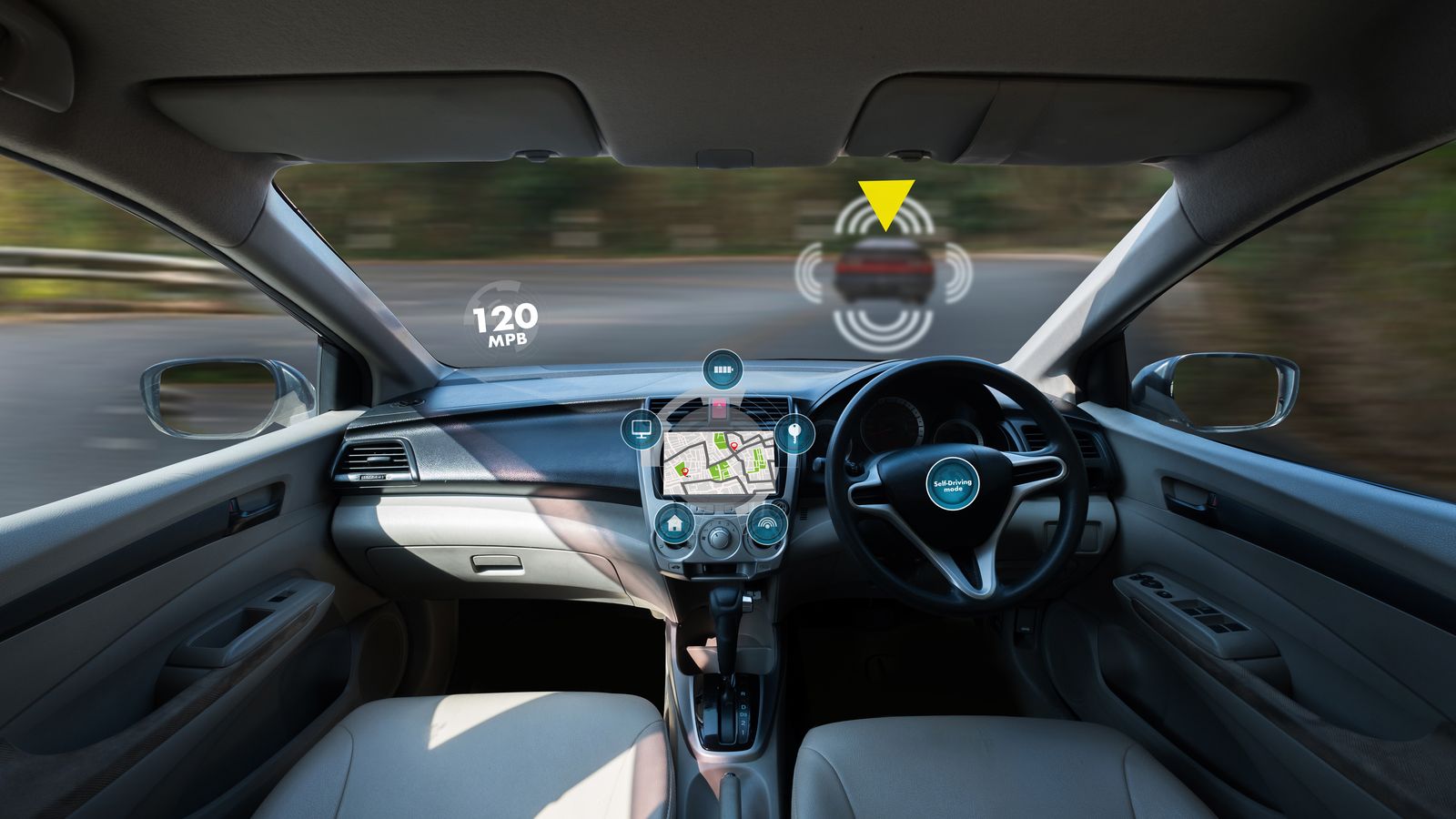
On July 3, Tesla began picking up passengers in Miami with nobody behind the wheel — and nobody riding shotgun to take over if something went wrong. There was no phased rollout, no months-long supervised trial run the way Tesla handled its Austin, Dallas, and Houston launches. Miami got the fully unsupervised version on day one: a Model Y navigating western Miami-Dade's streets, summer storms and all, using only cameras and a neural network to make every driving decision.
The coverage since has mostly asked whether the technology is ready. That's the wrong first question. The more revealing one is why Tesla was legally free to find out in public, on the first try, in the one major American city where South Florida's rain and glare would put its weakest sensor architecture under the most stress. The answer has less to do with Tesla's engineering than with an accident of state law — one that has quietly made Florida the default proving ground for autonomous vehicles nobody designed with Florida's weather in mind.
A law built for economic development, not readiness
Florida's autonomous vehicle statute predates the current wave of robotaxi deployment by a decade. The state legalized driverless operation in 2012, then stripped out most of the remaining friction in 2016 — eliminating the $5 million insurance bond requirement and removing the mandate that a human occupant be present at all. What's left, codified in Florida Statutes 316.85 and 319.145, is a framework that treats an autonomous vehicle's automated driving system as its legal "operator," requires manufacturers to self-certify compliance with federal safety standards, and explicitly bars local governments from imposing any additional permit, fee, or for-hire requirement of their own. There is no state agency that approves an operational design domain, no public docket, no waiting period tied to a mileage threshold or an incident-free track record. A company registers the vehicle, certifies it meets federal standards, and it's road-legal.
That's a strikingly different posture from the states Tesla has run this same experiment in before. California's DMV has repeatedly declined to grant Tesla a driverless deployment permit, citing insufficient disengagement data in fog, heavy traffic, and emergency-vehicle scenarios. Nevada's process for the 5,000-vehicle robotaxi expansion Tesla filed for in June runs through a formal docket with a public comment and protest period. Florida has neither. As Florida Department of Highway Safety and Motor Vehicles spokeswoman Beth Frady has noted, the state doesn't even track how many autonomous vehicles are registered, because none of them need a permit to operate.
This was a deliberate legislative choice, not an oversight. Florida lawmakers, led for years by former state senator Jeff Brandes, explicitly marketed the absence of a permitting regime as a competitive advantage over California — publicly framing it as being "open for business" for driverless technology at a time when other states were tightening rules. That framing has held for a decade, and it's exactly why Tesla picked Miami as its beachhead outside Texas: not because Florida's regulators had signed off on camera-only autonomy in tropical weather, but because there was no regulator positioned to withhold sign-off in the first place.
The technical question the law was never built to answer
The specific gap in Tesla's system is well documented and, as it happens, precisely the kind of gap Miami's climate is built to expose. Unlike Waymo, whose vehicles fuse lidar, radar, and cameras so that the failure of one sensor type doesn't blind the whole system, Tesla's Robotaxi fleet runs on vision alone — eight cameras and a neural network, with no lidar or radar backup. Federal regulators have flagged this architecture as a live safety concern, not an abstract one. In March, the National Highway Traffic Safety Administration escalated a preliminary probe into an Engineering Analysis — the regulatory stage that typically precedes a recall — covering roughly 3.2 million Tesla vehicles. Investigators linked the probe to nine crashes, including one fatality, where the vision system lost track of the road ahead in bright sun, mist, or dust and kept driving as though nothing had changed. The core problem regulators identified isn't that the cameras occasionally struggle in bad conditions — every sensor has limits. It's that the software often can't tell when its own view has degraded, so it neither warns the driver nor slows down.
Sun glare and sudden downpours are not edge cases in South Florida; they are Tuesday afternoon. That makes Miami, in practical terms, a live extension of the same engineering analysis NHTSA already has open — except this version runs on public roads with paying riders and no human able to intervene, rather than in a lab reviewing past incidents.
A patchwork that puts geography ahead of readiness
None of this means Tesla broke any law. It means the law didn't ask the question that mattered. Federal oversight, through NHTSA, is investigatory and after-the-fact — built to review crash data and issue recalls once a defect pattern emerges, not to pre-approve a deployment before it starts. State oversight is where a pre-deployment gate could exist, and in Florida, lawmakers deliberately built a framework without one. The result is a system where whether an unsupervised, camera-only robotaxi can legally operate in a hard-weather city depends less on any assessment of the technology's readiness for that specific environment and more on which state happened to write the most permissive statute a decade before the technology matured enough to test it.
This is worth sitting with because it inverts the usual assumption about how new technology gets tested. The expectation is that regulators identify appropriate proving grounds — controlled environments, staged rollouts, expanding gradually as data accumulates. What's actually happening is closer to venue shopping in reverse: companies deploy wherever the legal floor is lowest, and the resulting real-world conditions — Miami's glare and rain, in this case — become the test, whether or not they're the right one. Nevada's docket process, by contrast, at least built in a formal window for outside parties to object — the public comment period on Tesla's 5,000-vehicle Las Vegas application closed July 5, giving competitors, regulators, and safety advocates a documented chance to weigh in before any permit is granted. Las Vegas is a desert city with its own glare problem, and it remains a candidate for the same kind of unplanned stress test Miami is now running, depending on how the Nevada Transportation Authority rules.
What comes next
Tesla has signaled Orlando and Tampa as likely next stops within Florida, alongside continued pushes into Arizona and Nevada, though the company has tied any large-scale expansion to a future software rewrite, FSD version 15, with no confirmed release date. In the meantime, NHTSA's engineering analysis is expected to run up to eighteen months before any recall determination. Europe offers a preview of how that scrutiny can play out even for Tesla's less aggressive, driver-supervised software: Dutch regulators approved a Level 2 version of FSD in April after 18 months of independent testing, but a separate vote to extend that approval across the full European Union has no confirmed date and could slip into next year, after several member states raised their own concerns about the system's handling of speed limits and low-visibility conditions.
What Miami actually demonstrates isn't that Tesla's technology has cleared some readiness bar. It's that the current legal structure never required it to clear one before running the experiment on public streets. Until federal rulemaking catches up to the deployment timelines companies are already moving on, the operative question for any new AV market isn't whether the technology is ready for that city's conditions — it's simply which state got to the permissive statute first.
That distinction matters beyond Tesla. Every AV company now runs the same calculation before entering a new market: which jurisdictions require a permit, a public comment period, or a mileage-based track record, and which don't. Florida answered that question for itself in 2016, well before anyone could have modeled what an unsupervised, vision-only robotaxi would look like navigating a Doral thunderstorm. The statute wasn't written with Tesla's current architecture in mind at all — it was written broadly enough to cover whatever came next, on the assumption that federal standards and a company's own certification would do the work state regulators chose not to. Ten years later, that assumption is being tested in real time, on public roads, by a technology under active federal investigation for the exact failure mode Miami's weather is most likely to trigger. Whether the state revisits that framework will likely depend on what happens over the next several months, not on anything written into the law today.