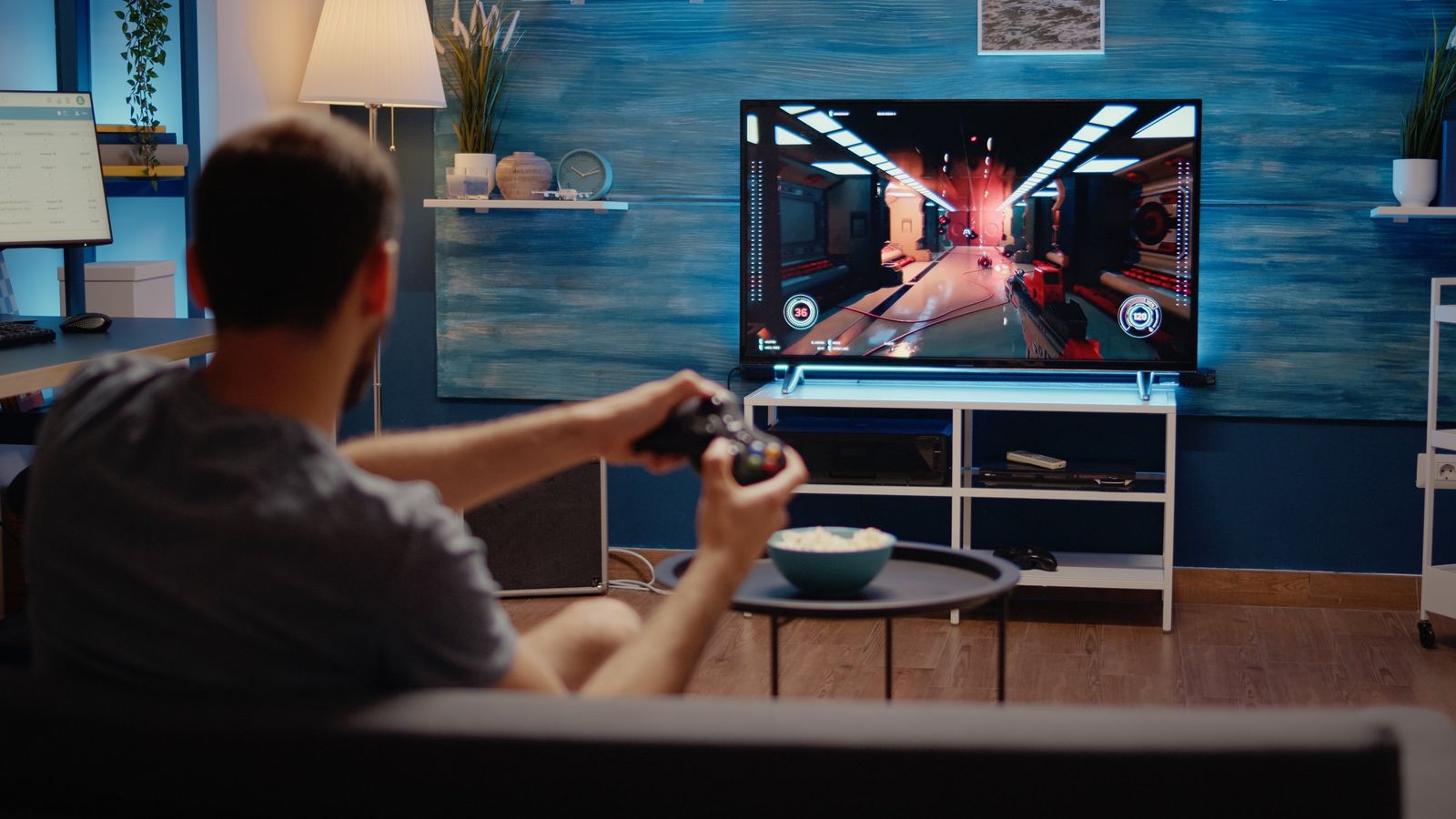
Microsoft has begun rolling out a dedicated Xbox app to Hisense televisions and other smart TVs running VIDAA OS, giving Xbox Game Pass subscribers a way to stream games on compatible sets without buying a console or any additional streaming hardware. The move adds another major smart TV platform to the growing list of screens where Xbox games can be played without a physical box connected to the television.
The app is arriving on VIDAA OS 9.6 and later, and Microsoft says it is targeting millions of VIDAA-powered televisions manufactured between 2024 and 2026, including select Hisense models. Owners of eligible TVs will see the app appear automatically on their home screen once the software update installs, or they can find it manually in the "Games" section of the menu bar. VIDAA has confirmed the rollout will happen in stages, so not every supported television will get the app on day one. Some households may see the icon appear this week, while others with the same television model in a different region could wait considerably longer, since both software distribution and regional licensing agreements factor into the schedule.
The app itself functions as a storefront and launcher rather than a piece of hardware emulation. Rather than downloading and installing game files onto the television the way a mobile or PC game would run locally, the Xbox app on VIDAA OS acts as a client for Xbox Cloud Gaming, Microsoft's server-side streaming service. Every title played through the app is rendered on Microsoft's data center infrastructure and sent to the television as a video stream, with the smart TV effectively functioning the same way it would when watching Netflix or YouTube, just with controller inputs sent back upstream in real time.
What you need to use it
Setup requirements are minimal by console standards. Microsoft lists four things: a VIDAA OS-powered smart TV (or a supported Hisense model) running VIDAA OS 9.6 or higher, an Xbox Game Pass subscription at any tier — Essential, Premium, or Ultimate — a Bluetooth-enabled wireless controller, and a stable high-speed internet connection. The controller doesn't have to be made by Microsoft. Along with the Xbox Wireless Controller, the Xbox Adaptive Controller, and the Xbox Elite Wireless Controller Series 2, the app also supports Sony's DualSense and DualShock 4 pads.
Once the update lands, setup follows a familiar streaming-app pattern: open the app, sign into an existing Xbox account or create a new one, and pair a controller over Bluetooth. From there, subscribers can browse and launch anything included in their Game Pass tier directly through Xbox Cloud Gaming, which streams the game from Microsoft's servers rather than running it locally on the TV's hardware.
A console-free way to play, with real limits
Because the app relies entirely on cloud streaming, it comes with technical ceilings that distinguish it from playing on an actual Xbox Series console. Streamed games on VIDAA TVs are currently capped at 1080p resolution in standard dynamic range. Anyone wanting 4K, HDR, or Dolby Atmos audio for supported titles still needs an Xbox Series X. The app also lets subscribers stream games they've purchased outright over the years, not just the rotating Game Pass catalog, provided those titles are supported for cloud play.
Microsoft has been upfront that the available game library isn't fixed. The company notes that Game Pass catalogs vary by region, by device, and by subscription tier, so two Hisense owners in different countries — or on different Game Pass plans — may see different libraries on the same day. As of this month, titles confirmed available through the app include Fallout 4, Halo Wars 2, Dead Cells, Among Us, Limbo, Fable Anniversary, Teenage Mutant Ninja Turtles: Shredder's Revenge, and Heretic + Hexen, among others.
VIDAA OS is bigger than just Hisense
While Hisense is the most recognizable brand tied to the rollout, VIDAA OS is not exclusive to Hisense hardware. The operating system also ships on televisions from Toshiba, Loewe, Schneider, and Akai, meaning the Xbox app's reach extends beyond a single manufacturer's product line to a broader swath of the smart TV market. That distinction matters: this is a platform-level integration rather than a co-branded partnership limited to one company's sets.
Hisense has also paired the software rollout with a UK sales promotion. Customers who buy select RGB MiniLED, MiniLED, or Laser Cinema television models between August 5 and November 3 can redeem a code for a personalized Xbox Design Lab controller along with a one-month trial of Xbox Game Pass Ultimate. Rob Andrews, Hisense's head of strategy and go-to-market for TV, said the Xbox integration builds on gaming features the company has already built into its television lineup, including refresh rates up to 180Hz, Auto Low Latency Mode, and dedicated Game Bar controls for adjusting picture and input settings during play.
Part of a broader console-optional strategy
The VIDAA rollout extends a strategy Microsoft has pursued for several years: putting Xbox in front of players on devices they already own rather than requiring a dedicated box under the TV. The company struck a similar cloud-streaming arrangement with LG smart TVs previously, and Xbox leadership has framed the approach as a way to reach players who may not want to, or can't, buy console hardware outright.
According to reporting cited by Xbox-focused outlets, Xbox CEO Asha Sharma said cloud streaming has now reached more than 150 million TVs and devices worldwide as of this summer, a figure that spans smart TVs, mobile devices, and other non-console hardware running Xbox's streaming apps. Microsoft first previewed the VIDAA expansion at CES in January, before beginning the phased rollout this summer. Xbox's public messaging around the launch has emphasized accessibility over exclusivity, with the company framing the initiative as a way to reach players "who may not be able to afford or justify buying dedicated gaming hardware."
That framing lines up with how Microsoft has talked about its Xbox strategy more broadly over the past several years. Rather than treating the console as the only entry point into its ecosystem, the company has steadily pushed Game Pass and cloud streaming onto phones, tablets, PCs, and now a wider swath of televisions, positioning the subscription itself — not any single piece of hardware — as the product people are actually buying into. The Hisense and VIDAA rollout is the latest expansion of that approach, following earlier Xbox app arrangements Microsoft struck with Samsung and LG smart TVs, as well as compatible Amazon Fire TV devices.
The timing also lands amid rising hardware costs across the console market, a dynamic some industry observers say could make subscription-based cloud streaming more attractive to price-sensitive buyers who already own a compatible smart TV. Whether that translates into meaningful Game Pass subscriber growth remains to be seen, since cloud streaming still depends on consistent broadband speeds that not every household has. Streaming quality can also vary with network congestion and distance from a data center, meaning the experience of playing through a VIDAA television will not be identical for every subscriber even with the same subscription tier and internet plan.
Availability still expanding
Not every Hisense or VIDAA-powered set will get the app immediately. Microsoft and VIDAA have both said the update is rolling out gradually rather than all at once, and compatibility depends on whether a given model can run VIDAA OS 9.6. Owners of Hisense TVs that run Google TV rather than VIDAA OS do not currently have access to the app; reporting from CES in January indicated a Google TV version is planned for later this year, though Microsoft has not given that variant a firm release date.
For now, the fastest way to check eligibility is straightforward: confirm whether a television runs VIDAA OS, check for a system update to version 9.6 or later, and watch the home screen for the Xbox app icon once that update installs. Viewers with further questions about specific model compatibility are being directed to VIDAA's support channels rather than Microsoft's, since VIDAA controls the software rollout schedule for its licensed television partners.