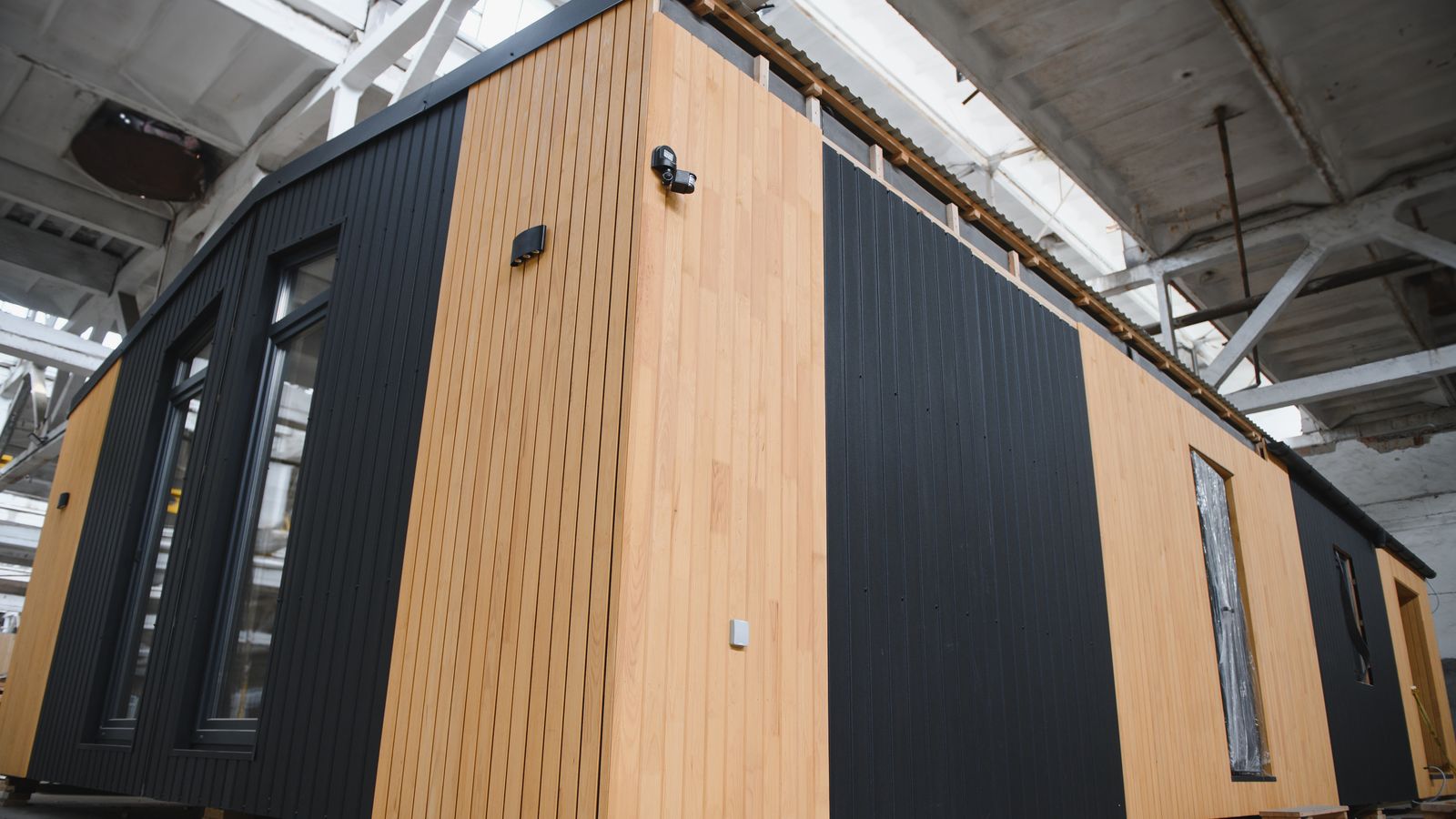
The Manufactured Housing Moment
The old mobile home stigma is fading fast — and serious money is paying attention.
There is a particular kind of investment that thrives in the space between what people need and what the market refuses to build. Manufactured housing has lived in that space for decades, overlooked by Wall Street, dismissed by urban planners, and quietly housing tens of millions of Americans who had no other affordable option. That arrangement is now changing — not because the housing crisis is getting better, but because it keeps getting worse, and investors have finally done the math.
Manufactured housing communities — the land-lease developments commonly and somewhat inaccurately called mobile home parks — have become one of the most sought-after asset classes in commercial real estate. What was once a fragmented world of small family-owned operations has attracted REITs, private equity funds, and institutional capital at a scale that would have been unthinkable a generation ago. The shift raises real questions about who benefits and who gets left behind, but the underlying economic logic is difficult to argue with.
To understand where the sector is going, it helps to understand where it has been.
A Name Change That Mattered
The term "mobile home" still carries cultural baggage — images of tornado-damaged parks, dated interiors, and transient lives. That image belongs almost entirely to a product that no longer legally exists. On June 15, 1976, the federal government drew a hard line. The National Manufactured Housing Construction and Safety Standards Act established what became known as the HUD Code: a uniform national building standard governing structural design, fire resistance, energy efficiency, plumbing, and electrical systems for all factory-built homes going forward. Any home built before that date is a mobile home. Everything after is, technically and legally, a manufactured home — and the distinction is more than semantic.
The HUD Code transformed what the product could be. Modern manufactured homes are built in climate-controlled factories under continuous third-party inspection, with defect rates below 2% before they ever leave the facility. They are engineered to withstand winds up to 100 miles per hour and must meet seismic zone standards. A comparable site-built home is 20 to 30 percent more expensive — and takes far longer to produce. Industry figures suggest a manufactured home can be placed and ready for occupancy roughly 80 percent faster than a conventional single-family build.
The stigma, though, survived the code change. That gap between perception and reality has shaped the investment opportunity.
The Numbers Behind the Narrative
Approximately 22 million Americans currently live in manufactured homes, accounting for roughly 5 percent of the total U.S. housing stock. The economics driving demand are not subtle. The average new manufactured home costs around $165,000 for approximately 1,400 square feet. The median price of a site-built home is over $410,000. For working families, retirees on fixed incomes, and rural households, there often is no comparable alternative.
In 2024, U.S. factories shipped over 103,000 new manufactured homes — more than double the annual volume from a decade earlier. Despite that production growth, vacancy rates across manufactured housing communities nationally hover around 5 percent. Well-run communities routinely report occupancy between 95 and 99 percent. Sun Communities, one of the sector's largest REITs, reported its U.S. manufactured home sites at 98 percent occupancy at the end of 2024, with average occupancy around 97 percent over the prior five years. That kind of stability is nearly unmatched in any other real estate category.
The financial resilience is just as striking. As of mid-2025, the delinquency rate on manufactured housing community loans was 1.39 percent — compared to 6.19 percent for multifamily and 10.99 percent for office properties. The asset class stayed notably stable through the volatility of 2020 through 2022, a period when most commercial real estate categories were in distress.
The Land-Lease Mechanic
The investment structure that makes manufactured housing communities so defensible is also what makes them, from a tenant perspective, complicated. In the typical arrangement, residents own their homes outright but rent the land beneath them — the "lot" or "pad" — from the community operator. Lot rents are relatively modest compared to apartment rents in most markets, but the arrangement carries an asymmetry that matters: moving a manufactured home costs between $5,000 and $15,000 or more, which means residents are effectively anchored in place.
This semi-permanence produces unusually sticky tenancy. Residents tend to stay for years, even decades, because the practical cost of leaving is high. For operators, that translates into consistent cash flow and low turnover costs. For investors, it means the income stream is as predictable as any they can find. For residents, particularly those on fixed incomes or facing constrained budgets, it means that lot rent increases — which operators can and do impose — carry significant weight. The Urban Institute has documented widespread reports of steep lot rent hikes following community acquisitions, particularly when private equity buyers enter a market.
A 2025 federal bill, the Manufactured Housing Tenant's Bill of Rights Act, proposed requiring at least 60 days' advance notice of any rent increase or community sale — a recognition that the existing framework offers residents limited protection when ownership changes hands.
Who's Buying In
Ten years ago, manufactured housing communities were predominantly owned by small operators: families who had run the same park for decades, often without professional management infrastructure. That profile has changed substantially. Communities with 75 or more spaces are now largely held by institutional investors, according to market analysis from Walker & Dunlop. Larger REITs — Equity LifeStyle Properties, Sun Communities, UMH Properties — have built significant national portfolios and bring public reporting requirements that have helped illuminate the sector's financial performance for other institutional players.
The most recent capital formation cycle has drawn in private equity at scale. Drake Real Estate Partners closed its fifth flagship fund with more than $515 million in commitments, with manufactured housing as a core target. GMF Group followed with approximately $250 million for a second fund aimed at acquiring manufactured housing properties nationwide. Even Berkshire Hathaway and Brookfield Properties have established positions in the sector.
The transaction environment tightened considerably in 2023 and early 2024 as interest rates rose and bid-ask spreads widened. Activity during that period was dominated by single-asset, off-market deals rather than large portfolio transactions. But the dynamics have shifted again. Rate reductions in 2025 have begun to thaw deal flow, and market participants describe the gap between buyer and seller expectations as far narrower than it was two years ago.
Why New Supply Won't Solve This
One structural feature that makes manufactured housing communities so attractive to investors — and so frustrating to housing advocates — is that new ones almost never get built. Zoning restrictions, community opposition, land costs, and permitting complexity create barriers to entry that keep supply constrained regardless of demand. The result is that existing communities are the inventory, and that inventory is finite.
Operators have responded by investing in what they already own rather than building new. Havenpark Communities announced plans to invest more than $30 million across its portfolio in improvements to amenities, infrastructure, and community appeal, with similar commitments in subsequent years. The focus industry-wide has shifted toward upgrading existing assets — a dynamic that increases community quality but does nothing to expand capacity in markets where it is most needed.
Cap rates in the sector have remained more stable than in multifamily throughout the rate cycle, averaging around 6.5 percent at the end of 2023 for the overall market, with four- and five-star communities trading at tighter levels. The spread between manufactured housing and multifamily cap rate volatility has been a meaningful talking point for institutional buyers looking for downside protection.
The Tension That Won't Go Away
The growing institutionalization of manufactured housing communities has produced a genuine tension that the sector has not yet resolved. The same features that make these communities financially defensible for investors — locked-in tenancy, limited exit options for residents, supply constraints that keep demand high — create conditions in which residents have relatively little leverage when ownership priorities shift.
Rent control advocates have taken notice. Several states are exploring or have enacted protections for manufactured housing community residents, and the prospect of broader lot rent regulation has begun to affect investor underwriting. One industry analysis found that even the threat of rent control in states where it had not yet been enacted widened cap rates by roughly 50 basis points, as buyers priced in regulatory risk. Washington state and Colorado have been specifically cited as markets where the possibility of new restrictions has influenced deal activity.
The counter-argument from operators and investors is that institutional ownership, whatever its drawbacks, tends to produce better-maintained communities with more consistent management than the fragmented mom-and-pop market it replaced. There is some evidence for this, though the record is uneven, and it does not address the core vulnerability that residents face when lot rents rise faster than their incomes.
The Broader Case
Whatever one makes of the investor dynamics, the underlying housing math is not going away. The United States has a structural shortage of affordable housing, and manufactured homes represent one of the only scalable, non-subsidized mechanisms for producing it. Factory construction is faster, more cost-efficient, and far less labor-intensive than site-built alternatives. The HUD Code provides national quality oversight. The product has improved substantially over five decades in ways that the public perception has been slow to absorb.
Policymakers have begun to acknowledge this more directly. Federal recognition of manufactured housing as a legitimate and cost-effective response to the affordability crisis has grown in recent years, and potential regulatory updates — including possible revisions to HUD building code standards and deregulatory signals around land availability for new community development — could create meaningful new capacity if they materialize.
For investors, the manufactured housing moment is already underway. For the millions of Americans who live in these communities, the question is whether the capital flowing in brings stability or replaces one set of affordability pressures with another.