The Camera You Never Consented To: How Flock Safety Built a Nationwide Surveillance Machine
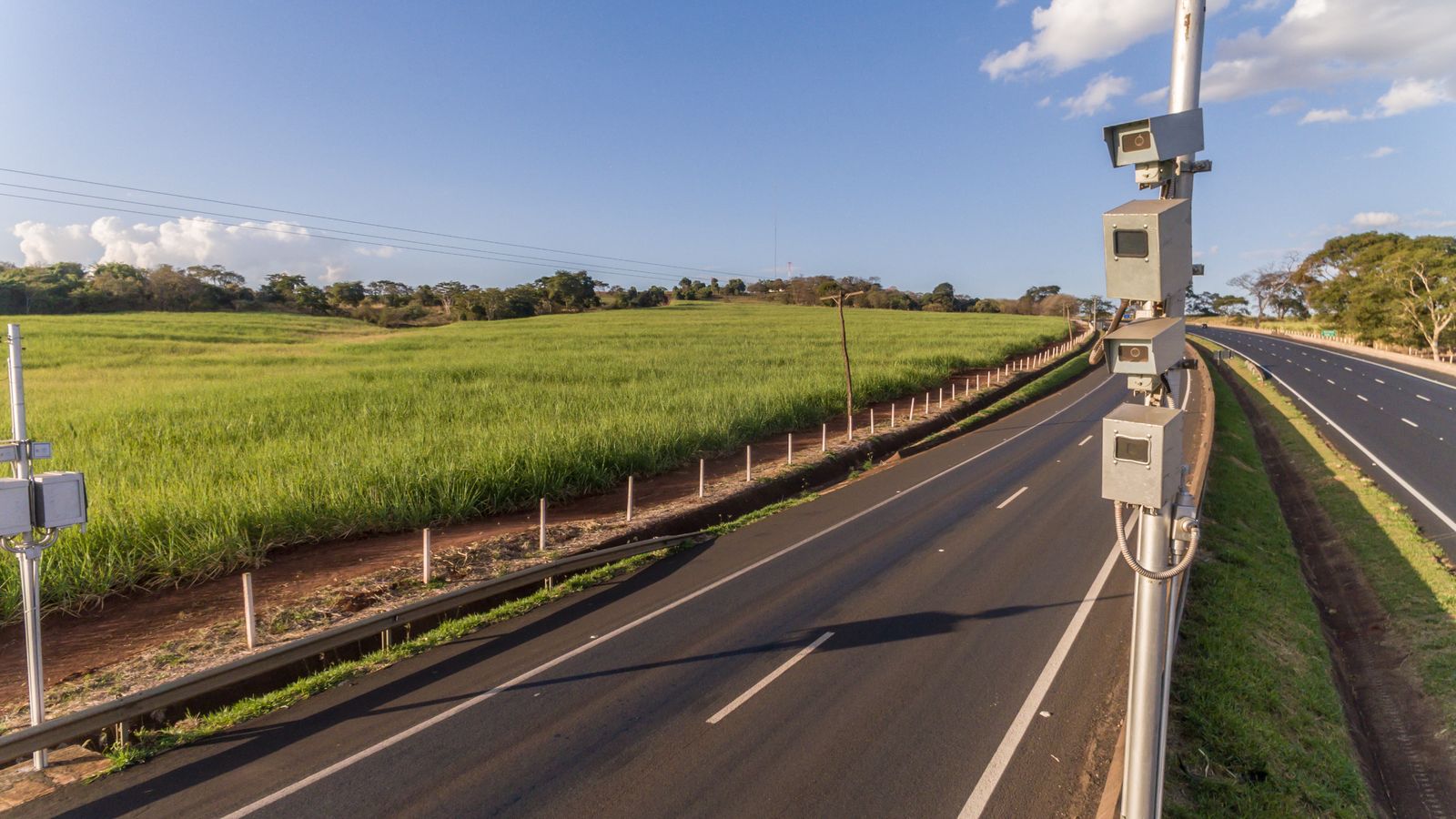
There is a reasonable chance a camera photographed your car this morning. Not a red-light camera, not a traffic monitor, and not the kind you can file a records request to dispute. It was a small, solar-powered device mounted on a pole near your neighborhood entrance, an intersection, a parking lot, or the front of the school where your kids were dropped off. It captured your license plate, logged your vehicle's make, model, color, and any distinguishing characteristics, noted the time and your location, and quietly added all of it to a searchable database accessible by thousands of law enforcement agencies across the country.
You were not notified. You did not consent. There is no opt-out.
That is the current reality of Flock Safety, an Atlanta-based company that has quietly constructed what may be the largest private vehicle surveillance network in American history—and is now at the center of one of the most consequential civil liberties debates of the decade.
Twenty Billion Scans a Month
Flock Safety was founded in 2017 by Garrett Langley and Matt Feury, motivated by a property crime in Atlanta where police told Langley that license plate data would have cracked the case but existing readers were too expensive for most departments. The solution Flock built was deceptively simple: automatic license plate readers, sold on a subscription model at roughly $2,500 per camera annually, marketed not just to police but to homeowner associations, private businesses, and schools. The pitch was crime reduction. The infrastructure they built was something considerably larger.
As of 2025, Flock operates in over 5,000 communities and works with more than 5,000 law enforcement agencies across 49 states. The system performs over 20 billion vehicle scans per month. Its valuation has climbed from $4.8 billion in 2024 to $7.5 billion after a $275 million raise led by Andreessen Horowitz in September 2025, and reached $8.4 billion in a subsequent April 2026 funding round. The company has raised more than $1 billion in total venture capital.
Those numbers matter because they reveal the scale of what was built largely beneath public awareness. A crowdsourced mapping project called DeFlock.me has documented nearly 90,000 individual ALPR cameras across the country. Will Freeman, the Colorado-based activist who runs the project, told NPR in February 2026 that communities were dropping Flock contracts at an accelerating pace—and that the momentum would only grow.
What the Camera Actually Knows
The framing that typically accompanies Flock's deployment—that the cameras simply read plates to flag stolen cars—is accurate as far as it goes. But it dramatically understates what the system collects and what it enables.
Each Flock camera captures not just the license plate but what the company calls "vehicle fingerprinting": color, make, model, distinctive features like hood ornaments, roof racks, bumper stickers, and visible damage. Linked to DMV records, the plate number yields a name and home address. Over time, as a vehicle passes the same cameras repeatedly, the system builds what privacy advocates describe as a pattern-of-life profile—a log of where a person goes, how often, and at what times. Individually, any one data point is unremarkable. In aggregate, it constitutes intimate surveillance of a person's daily movements.
And critically, Flock's "national lookup" feature means that a police department in Virginia can search the footage captured by cameras in Oregon. A department in Texas can search cameras in Washington state. The local camera feeds into a national network. That cross-jurisdictional reach is central to the system's appeal to law enforcement—and central to the problem.
The Immigration Question That Won't Stay Quiet
Flock's public statements are consistent: the company does not partner with Immigration and Customs Enforcement, ICE has no direct access to the system, and federal data sharing is off by default. All of that is technically accurate. It is also, the evidence suggests, a narrow framing of a much messier reality.
In May 2025, 404 Media reported that local law enforcement agencies around the country had been conducting Flock searches at ICE's request—a "side door" into a system ICE had no formal contract to access. The searches numbered in the thousands. In Bend, Oregon, federal immigration officials—including ICE, Customs and Border Protection, and Homeland Security Investigations—queried the city's Flock database 279 times in just the first three weeks of the system's operation in June 2025. Bend Police initially left the national lookup setting open by mistake; by the time it was discovered, federal agents had already been inside.
The University of Washington Center for Human Rights obtained records from 31 Washington state law enforcement agencies and found that at least eight had enabled direct data-sharing with Border Patrol during 2025. At least ten others had given Border Patrol apparent "back door" access to their networks without explicitly authorizing it. The data-sharing happened across three channels—what researchers called front door, back door, and side door access—suggesting that the problem was structural, not incidental.
In Virginia, investigative reporting by the Virginia Center for Investigative Journalism found that law enforcement had conducted nearly 3,000 immigration-related searches on Virginia's Flock network over a 12-month span. Roughly nine in ten searches were made by agencies in other states accessing Virginia's data. The Charlottesville Police Department shut off outside access to its network entirely after its chief confirmed that other Virginia jurisdictions were querying Flock data on behalf of ICE.
The most striking individual case came from Texas, where a police officer used Flock's network—including cameras in Washington state—to track a woman suspected of self-administering an abortion. The search field where users must explain their reason for querying the system showed the entry: "had an abortion, search for female." The episode demonstrated that Flock's data did not just enable immigration enforcement. It enabled the surveillance of constitutionally protected conduct in states where that conduct was protected.
The Oshkosh Moment
Of all the incidents that have damaged Flock's credibility, the one in Oshkosh, Wisconsin, may be the most instructive. In April 2026, the city council voted 7-0 to approve a Flock contract—then, less than 24 hours later, voted to rescind it after Police Chief Dean Smith disclosed during the meeting that a Flock representative had told the council the system did not create heat maps of vehicle movement. Smith said he had personally seen heat maps generated by the system. The council rescinded the contract, citing what it characterized as false statements by the vendor.
That kind of gap between Flock's marketing and what the system actually does has emerged repeatedly. In Mountain View, California, an audit found that more than 250 unapproved law enforcement agencies had searched the city's cameras, conducting roughly 600,000 queries in the 12 months ending December 2025. The city had not authorized most of those agencies. A national lookup setting on at least one camera had been toggled on without the city's knowledge. The city council voted unanimously to terminate the contract. In Illinois, a state audit found that Flock had allowed CBP to access state cameras through a pilot program that Flock's own leadership claimed it was unaware of.
The security concerns compound the governance ones. In December 2025, reporting by 404 Media found that at least 60 Flock Condor cameras—pan-tilt-zoom devices capable of zooming in on faces—had been left exposed to the open internet, allowing anyone to watch live feeds, download 30 days of archived footage, and change camera settings. Login credentials for Flock systems appeared on Russian cybercrime forums. Senator Ron Wyden and Representative Raja Krishnamoorthi sent a letter to the FTC in November 2025 urging an investigation into what they described as the company's "cavalier attitude towards cybersecurity."
Expansion Beyond the Plate
The license plate reader was only the beginning of Flock's product ambitions. In October 2025, the company announced Raven, a gunshot detection microphone system marketed with the slogan "Safety you can see and now hear." The original marketing materials indicated Raven would also alert police to screaming and human distress—high-powered microphones on public streets, running audio analysis continuously. After public backlash, the website language was updated. The capability, the Electronic Frontier Foundation noted, remained.
The same month, Flock launched drone products: "Drone as First Responder" for police departments and "Drone as Automated Security" for private businesses. In May 2025, the company was developing an internal product called Nova, described in reporting as a "public safety data platform" that would supplement license plate data with information from data breaches, public records, and commercially available data to build profiles on specific individuals without a warrant. The EFF called Nova a "dystopian panopticon." After 404 Media reported on it, Flock dropped plans to include breach data in the product. Nova's other capabilities remain in use by law enforcement through an early access program.
The product roadmap is telling. Flock began as a license plate reader company. It has methodically expanded into audio surveillance, drone deployment, facial recognition-capable cameras, and data aggregation from commercial sources. Each product extends the perimeter of what the system can track.
The Law Hasn't Caught Up
Courts have largely, though not uniformly, sided with Flock and local governments that deploy its cameras. In January 2026, a federal court in Virginia ruled in Schmidt v. City of Norfolk that the city's ALPR program complied with the Fourth Amendment, emphasizing the limited number of cameras and short data retention periods. A Washington Court of Appeals decision the same month held that an ALPR image captured on a public road did not implicate constitutional privacy protections, reasoning that the camera was functionally equivalent to an officer manually noting a plate.
Those decisions track with the traditional third-party doctrine: information you expose in public spaces has no Fourth Amendment protection. Critics argue, with force, that continuous automated tracking of movements across a national network is categorically different from an officer glancing at a plate. The Supreme Court suggested as much in Carpenter v. United States, its 2018 ruling on cell phone location data, which held that aggregated location tracking over time could implicate the Fourth Amendment even when each individual data point would not. How Carpenter applies to ALPR data at Flock's scale remains an open constitutional question.
Legislatures have started to move, though unevenly. Washington state passed SB 6002 in March 2026, establishing the state's first legal restrictions on ALPR access and use, requiring agencies to register their systems with the state Attorney General, and restricting data sharing. California Attorney General Rob Bonta filed suit against the City of El Cajon in October 2025 for systematically sharing Flock data with out-of-state agencies in violation of state law. A class action amended complaint was filed against Flock Safety itself in April 2026, alleging the company illegally shared California users' location data with out-of-state law enforcement agencies.
The Backlash Grows
More than 50 cities have now canceled Flock contracts, deactivated cameras, or rejected proposals to install them. The list includes liberal college towns—Flagstaff, Cambridge, Eugene, Santa Cruz—but also cities motivated less by ideology than by specific audits showing their data had gone places they didn't authorize. Denver decommissioned all 110 of its Flock cameras at the end of March 2026, replacing them with 50 Axon cameras under a contract with stricter data governance provisions. The private Flock network installed by HOAs throughout Denver continues to operate.
Protests have followed the cameras. At Emory University in April 2026, the DeFlock Emory Coalition organized a walkout attended by roughly 80 participants, presenting a petition signed by nearly 1,000 students and faculty demanding the removal of Flock cameras from campus and a broader review of surveillance policies.
The EFF has documented more than 80 law enforcement agencies using anti-Romani slurs in Flock search fields—terms like "gpsy vehicle" and "possible gpsy"—often with no specific crime mentioned. More than 400 additional searches targeted Irish Traveller communities. The audit logs captured what the cameras enable: not just crime-solving, but profiling, pattern-of-life tracking of disfavored groups, and searches tied to political protest.
Flock's own 2025 Impact Census, based on surveys of nearly 700 law enforcement agencies, found that roughly one in five cases cleared by law enforcement involved Flock technology, and that conservative estimates suggest the system assists in recovering more than 10,000 missing persons annually. Those are not trivial numbers. The company's law enforcement partners are not wrong that the technology solves crimes.
The question that cities, courts, and the public are now being forced to answer is not whether Flock's cameras help solve crimes—they do. The question is what else they enable, who controls access, and whether a private company valued at $8.4 billion should be permitted to operate a de facto national movement database with minimal federal oversight, contested security practices, and governance that has demonstrably failed to contain data flows that local governments explicitly prohibited.
The camera on your street has already been answering that question. Nobody asked if you were okay with the answer.