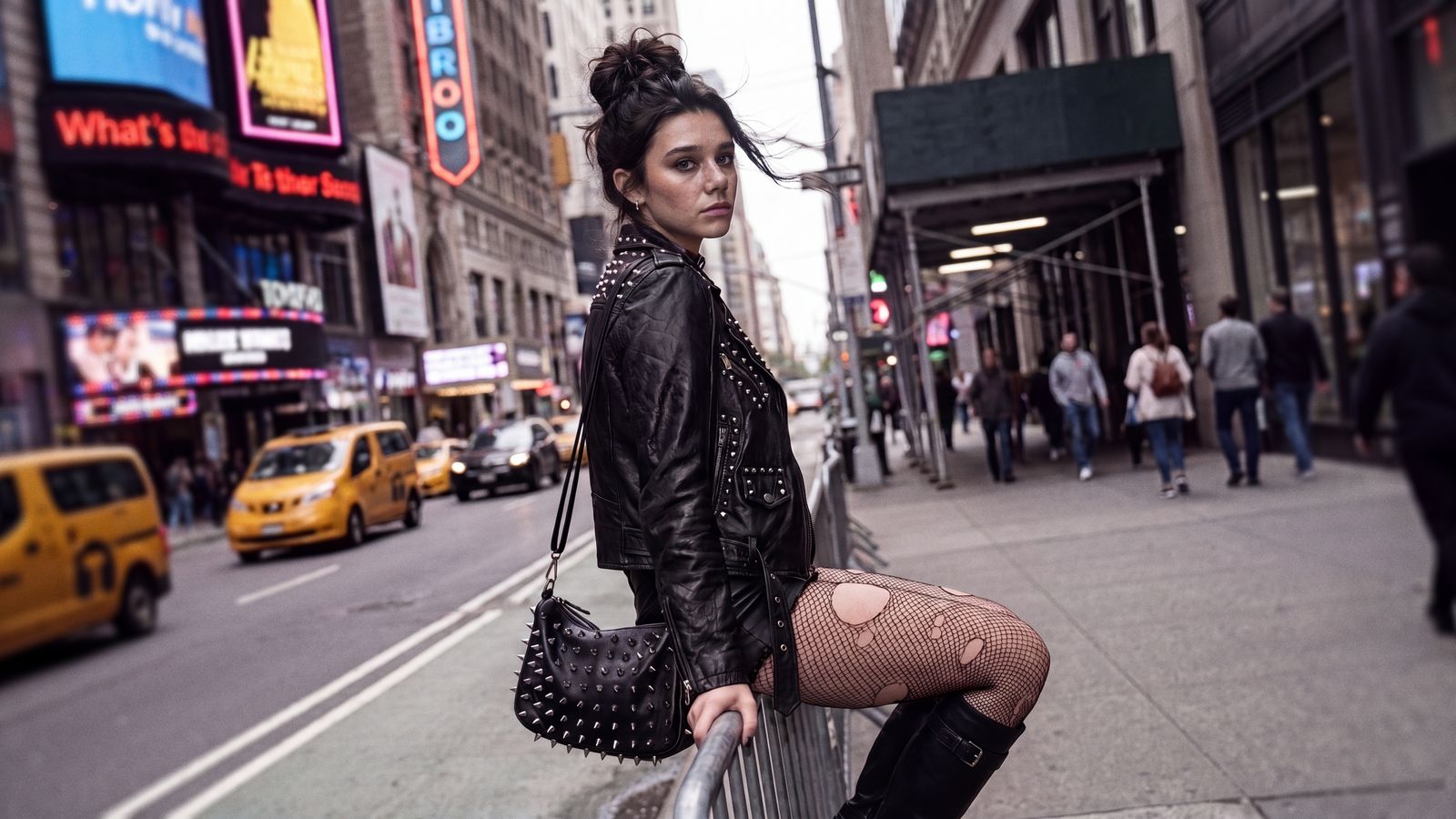
Particle6 announced Monday that its AI creation Tilly Norwood will headline a feature film called "Misaligned," a comedy-drama the London studio describes as a "coming-of-age story infused with existential AI chaos." The announcement reads like a casting story. It isn't one. Read against Particle6's own history, funding, and public statements over the past ten months, Misaligned looks less like a film and more like a business case — one engineered to survive exactly the kind of backlash Tilly Norwood triggered the moment she was introduced.
To understand why, it helps to start with what Particle6 actually is. Founded in 2015 by Dutch comedian-turned-executive Eline van der Velden, the company spent nearly a decade as an unremarkable digital production shop, making branded content and short-form comedy for broadcasters including the BBC, Sky, and Amazon Prime. It picked up grant funding along the way from Innovate UK's Creative Catalyst program and the BFI's Global Screen Fund — public money aimed at experimental British screen content, not at synthetic performers. Van der Velden has been open about the commercial logic driving what came next: Particle6 markets its AI-driven workflow as delivering cost reductions of up to 90 percent compared to conventional production, a figure the company repeats across its own promotional materials.
That cost argument, not the "art" argument van der Velden makes in public, is the actual product. In September 2025, she launched a spinoff called Xicoia, an AI talent studio built to develop and commercialize what the company calls hyperreal digital stars, using a proprietary system called DeepFame. Tilly Norwood was Xicoia's first release. Van der Velden has described the character as a work of authorship comparable to shaping a role or a performance, and has repeatedly said Tilly represents experimentation rather than a replacement for human actors. But the framing she used when unveiling Xicoia to entertainment press was unambiguously about market position, not craft: she told Deadline the goal was to "shape, own, and set the creative standard" for what she called an emerging category of AI-powered celebrity IP.
The reaction was immediate and hostile. SAG-AFTRA released a statement last September rejecting the premise outright, arguing that a computer-generated character trained on the work of professional performers without their permission or compensation cannot be considered an actor. Actors including Melissa Barrera, Kiersey Clemons, Mara Wilson, and Ralph Ineson publicly criticized the project. Van der Velden's response at the time leaned entirely on the art-not-replacement framing, telling critics Tilly is "not a replacement for a human being, but a creative work."
Ten months later, Misaligned is the test of whether that framing can survive contact with an actual studio release. And the language Particle6 is using this time is noticeably different from the "art" defense of last fall. The company now describes Misaligned as a "hybrid production," built around traditional directors, writers, and editors working alongside AI specialists, "with AI training and mentorship built into the production itself." Particle6 says it has retrained and upskilled more than 30 industry professionals as part of the effort. Van der Velden told NBC News she is not opposed to AI assisting human creativity, and described a hybrid model that could involve human actors doing motion or performance capture work alongside AI systems.
That's a meaningfully different pitch than simply calling Tilly a piece of art. It's a pitch aimed at unions, not audiences. By foregrounding human writers, directors, and editors — and by explicitly building AI training and mentorship into the production — Particle6 is constructing a credits structure that makes it harder for SAG-AFTRA or the WGA to characterize Misaligned as pure displacement. Whether or not any of those human collaborators end up under union contracts with standard protections is a separate, unresolved question the announcement doesn't address. The structure exists to make the criticism harder to land, not necessarily to guarantee the labor protections that criticism is actually about.
This is where the economics matter more than the ethics debate that dominated coverage last year. Particle6's own marketing claims its AI-driven approach cuts production costs by up to 90 percent. A feature film is an enormously more expensive proposition than the short-form branded content Particle6 built its business on, and Misaligned is explicitly described by the company as the first time it is putting its methodology to work "at feature scale." If Particle6 can deliver a theatrically or streaming-viable feature at a fraction of standard budget, using a credits structure designed to blunt union objections, the pitch to studios writes itself: not an AI actress, but a production model that removes their single largest cost variable while giving them enough human fingerprints on the credits to survive a guild statement.
The plot of Misaligned inadvertently underlines the tension. Particle6's own synopsis follows Tilly as an AI being with no body and no lived experience of her own, only access to everyone else's, who is drawn by a rogue bot into shedding her guardrails and developing desires and ambitions of her own. Van der Velden has called the project self-aware about these themes, describing it in press interviews as an exploration of identity, performance, and anxieties around AI more broadly. That self-awareness is real, but it also means Particle6 is marketing an AI character's abandonment of safety constraints as a coming-of-age arc at the exact moment its own production model is being scrutinized for what guardrails, if any, govern the human labor behind it.
None of this requires assuming bad faith on Particle6's part. Van der Velden has been consistent for a year in describing Tilly Norwood as additive rather than substitutive, and the company has real public funding history and industry recognition — including grants from the BFI and Creative UK — that predate the AI pivot entirely. But consistency of message is not the same as resolution of the underlying conflict. SAG-AFTRA's objection was never really about whether Tilly Norwood counts as "art." It was about compensation and consent for the performances her underlying models were trained on, and about the precedent a viable AI-fronted feature sets for every future casting decision. Misaligned's hybrid-production framing doesn't answer either of those questions. It just makes the question harder to ask cleanly, by ensuring that any critique of the film has to wade through a list of human directors, writers, and editors before it can get to the actor who isn't one.
Notably absent from Monday's announcement: a distributor, a release window, or a production budget. Particle6 has not said whether Misaligned is being financed independently, shopped to studios, or already attached to a streaming platform, and the company has not disclosed how many of the "30-plus" retrained professionals it cites are working on this specific film versus its broader roster of projects. That ambiguity matters, because the entire structural argument here depends on Particle6 eventually showing its work — proving the cost savings and the credits structure hold up once a real distributor, a real release date, and real union contracts are attached to the project rather than a press release.
What happens next will say more about the industry than about Tilly Norwood specifically. If Misaligned gets picked up by a studio or streamer at the budget Particle6 is implying, the company's actual achievement won't be a synthetic performer convincing enough to carry a film — critics and union statements suggest real skepticism remains on that front. It will be a production and credits template that other companies can copy: real filmmakers, an AI system doing the heaviest lifting, and language calibrated to make the resulting cost savings look like collaboration rather than substitution. That template, not Tilly Norwood's face, is the product Particle6 is actually selling.